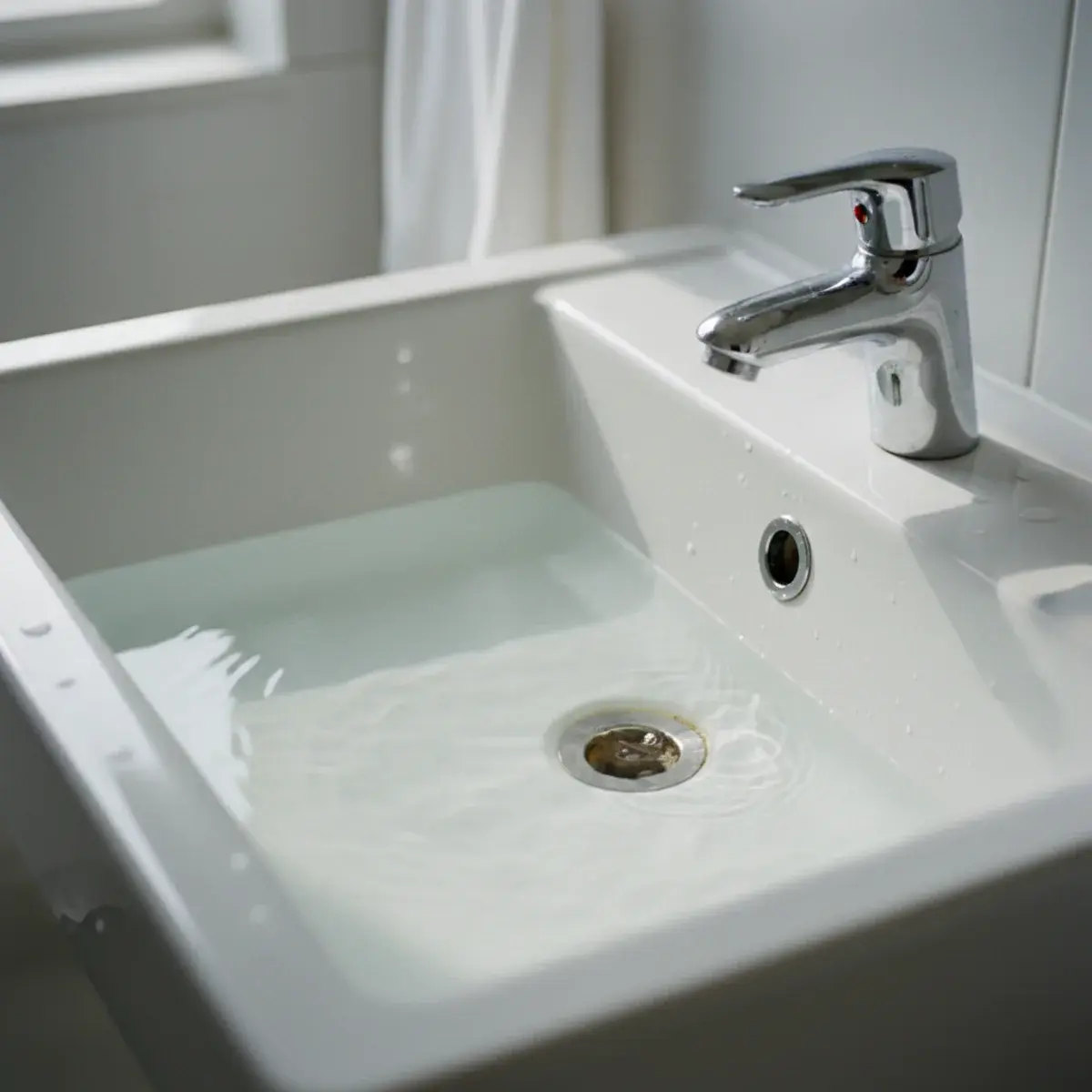
If the same drain clogs over and over, the plunger is treating a symptom, not the cause. Recurring clogs usually trace back to grease buildup, the wrong things going down the drain, venting problems, or roots in the sewer line.
A drain that clogs once is bad luck. A drain that clogs repeatedly is a symptom of an underlying cause that plunging and pouring chemicals will never fix. Recurring clogs almost always trace back to one of a handful of culprits: grease and soap buildup coating the pipe, the wrong materials going down the drain, a venting problem that slows flow, or — for whole-house backups — roots invading the sewer line. Identify which one is driving your problem and you can stop the cycle for good.
Grease and fat buildup (the kitchen culprit)
The most common cause of recurring kitchen clogs is grease. Cooking fats and oils go down the drain as a warm liquid, then cool and solidify on the pipe walls a little farther down the line. Each time it happens, the coating thickens and the opening narrows, catching food particles until flow slows to a crawl and finally stops.
Plunging or snaking punches a hole through the worst of it, which is why the drain works again for a while — but the grease lining the pipe is still there, so it clogs again soon. The fix is to stop putting grease down the drain (pour it into a container and throw it away) and, for an established buildup, to have the pipe scoured clean rather than just punctured.
Soap, hair, and gunk (the bathroom culprit)
Bathroom drains clog from a different mix: hair binds with soap scum and skin oils into a dense mat that catches everything else. Bathtub and shower drains are especially prone to this. A drain cover or hair catcher prevents most of it, and clearing the visible clump regularly keeps things flowing.
Putting the wrong things down the drain
Drains are designed for water and small amounts of waste, not for everything that gets pushed down them. Recurring clogs frequently come from:
- "Flushable" wipes that do not actually break down and snag in the line
- Coffee grounds and eggshells that accumulate like sediment
- Starchy or fibrous foods — rice, pasta, potato peels, celery — that swell or tangle
- Grease and oil, as above
- Hair and dental floss, which knit into existing debris
A garbage disposal helps with some food waste but is not a license to send everything down. Being deliberate about what enters the drain is the cheapest prevention there is.
A venting problem
Your plumbing relies on vents — pipes that run up through the roof — to let air in behind draining water. When a vent is blocked or inadequate, drains gurgle, empty slowly, and clog more readily because the system cannot move water efficiently. Signs of a venting issue include gurgling sounds, slow drainage across multiple fixtures, and odors. This is less obvious than a grease clog and usually needs a plumber to diagnose.
Roots in the sewer line (the whole-house culprit)
When more than one drain backs up at the same time — or the lowest fixtures in the house back up when you run water elsewhere — the problem is likely in the main sewer line, not an individual drain. In established San Bernardino neighborhoods with mature trees and older clay or cast-iron sewer pipes, tree roots are a frequent offender. Roots seek the moisture and nutrients inside the line, enter through joints or cracks, and grow into a mass that catches debris and eventually blocks the pipe.
Roots come back, which is why these clogs recur on a schedule. A camera inspection confirms the cause and location, and options range from cutting the roots and hydro jetting the line to repairing or replacing a damaged section.
Why chemical drain cleaners are not the answer
It is tempting to reach for a bottle of drain cleaner, but for recurring clogs they are a poor long-term solution. Harsh chemicals can corrode older pipes and damage seals over time, they frequently fail to clear grease and root clogs completely, and they are hazardous to handle and to have sitting in a partially blocked pipe. Mechanical methods are both safer and more thorough.
How to actually stop recurring clogs
- Match the fix to the cause. A grease-lined kitchen line needs scouring, not just snaking. A root-clogged sewer line needs a camera inspection and a root-removal plan.
- Consider hydro jetting for buildup. Where snaking punches a hole, hydro jetting uses high-pressure water to scour the pipe walls back to near-original diameter, removing the grease and debris that cause repeat clogs. Our comparison of hydro jetting and snaking explains when each makes sense.
- Get a camera inspection for whole-house backups. Seeing inside the line turns guesswork into a targeted repair.
- Change the habits that cause it. Keep grease, fibrous food, and wipes out of the drain, and use hair catchers in the bathroom.
- Schedule preventive cleaning if your home has a history of clogs or roots.
A single stubborn drain is usually a buildup problem you can address directly. Repeated whole-house backups point to the sewer line and deserve a professional look. Either way, the lesson is the same: when a drain keeps clogging, stop treating the symptom and find the cause.
Frequently Asked Questions
A clog that returns quickly usually means the underlying buildup was not fully removed, or there is a deeper issue — grease coating the pipe walls, a venting problem, or roots intruding into the sewer line. A snake clears a path through a blockage, but it does not always scour the pipe clean, which is why clogs recur.
Frequent use of harsh chemical drain cleaners can corrode older pipes and damage seals, and they often fail to fully clear grease or root clogs anyway. They can also be hazardous to handle. For recurring clogs, mechanical clearing such as snaking or hydro jetting is generally safer and more effective.
For most homes, a professional drain cleaning every year or two is reasonable preventive maintenance, and more often for households that are hard on their drains or have a history of root intrusion. Kitchens with heavy cooking and older sewer lines benefit from a regular schedule.
Need a plumber in San Bernardino?
Call now or request service online and we'll connect you with local plumbing help.