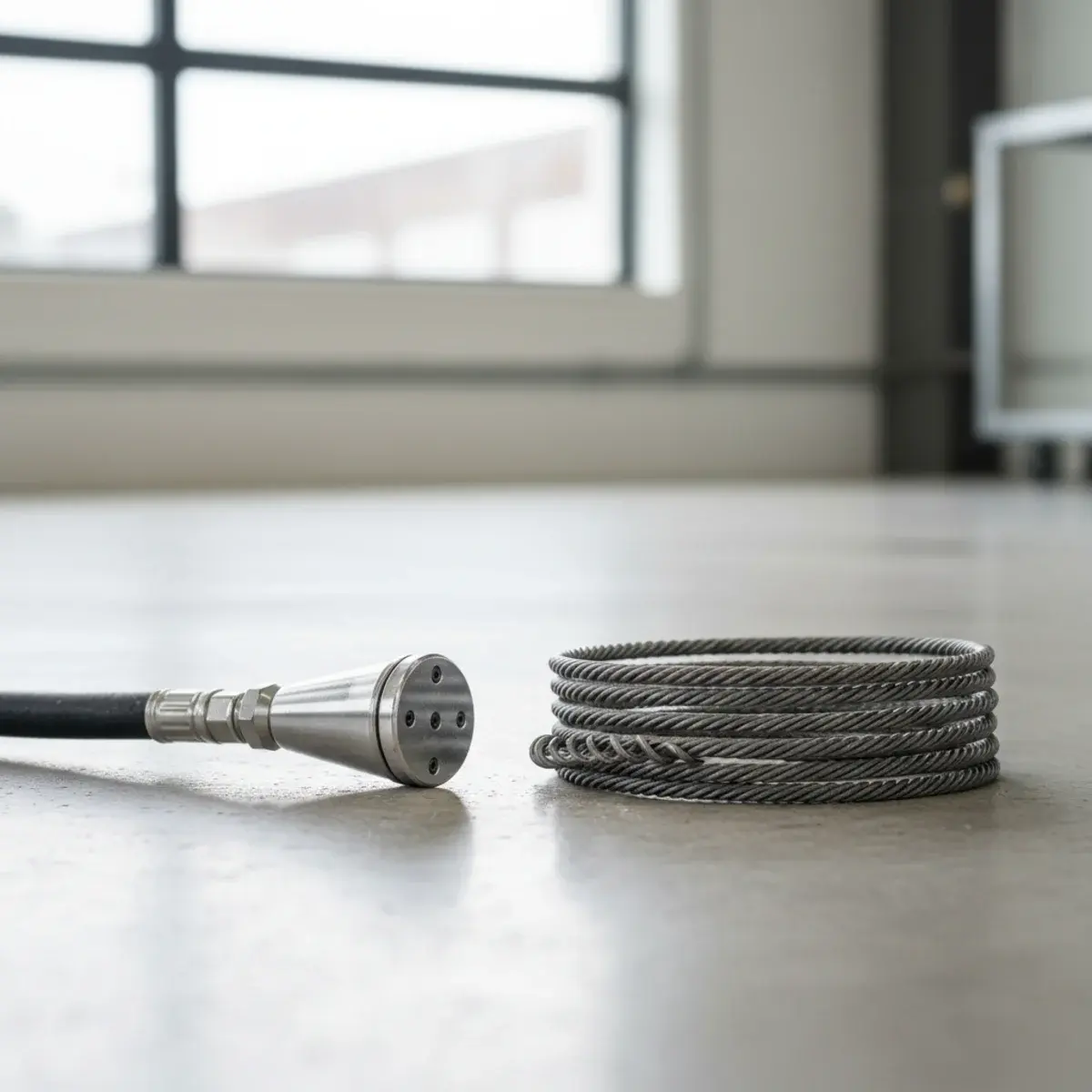
A drain snake punches through a clog; hydro jetting scours the whole pipe clean. Snaking is fast and ideal for a single localized blockage, while hydro jetting tackles grease, scale, and roots across the line. Here is how to choose.
Both hydro jetting and snaking clear blocked drains, but they are different tools for different jobs. A drain snake (or auger) is a flexible cable that bores through a clog mechanically, making it perfect for a single, localized blockage. Hydro jetting blasts high-pressure water through the pipe to scour the entire interior clean, making it the right choice for heavy grease, scale, or root buildup spread along the line. Choosing correctly comes down to what is actually wrong inside your pipes.
How drain snaking works
A drain snake is a long, flexible metal cable, often with a coiled or bladed head, that the plumber feeds into the drain and rotates. When the head reaches the clog, the rotation breaks it apart or hooks it so it can be pulled out. Power augers drive larger cables for main lines.
Snaking shines when there is a specific, identifiable blockage — a wad of hair in a bathroom drain, a clog of food in a kitchen line, or an object lodged somewhere accessible. It is fast, relatively inexpensive, and effective at restoring flow quickly.
Its limitation is that it clears a path through the clog without necessarily cleaning the pipe. If the pipe walls are coated in grease or scale, the snake punches a hole through the obstruction but leaves the buildup behind. That is why a snaked drain often flows freely again for a while and then clogs once more as the remaining buildup catches new debris.
How hydro jetting works
Hydro jetting uses a specialized hose with a nozzle that directs water at very high pressure — and high volume — through the pipe. Forward and reverse jets break up the blockage and propel the hose through the line while scouring the pipe walls. Instead of just opening a channel, jetting strips grease, scale, sludge, and root hair off the interior, restoring the pipe to close to its original diameter.
This thoroughness is the whole point. Jetting addresses the cause of recurring clogs — the buildup lining the pipe — rather than just the immediate symptom. It is particularly effective against:
- Hardened grease and fat in kitchen and main lines
- Mineral scale, which is a real factor given the Inland Empire's hard water
- Root hair and debris in sewer lines (often paired with mechanical root cutting first)
- Sludge and sediment accumulation along the run
Which one your situation calls for
Choose snaking when:
- You have a single, isolated clog in one fixture
- You need fast, affordable relief for a sudden blockage
- The pipe is otherwise in reasonable shape and just has an obstruction
- A solid object needs to be retrieved or broken up
Choose hydro jetting when:
- The same drain clogs again and again despite snaking
- Multiple fixtures are sluggish, pointing to buildup along the main line
- There is significant grease, scale, or root accumulation
- You want the pipe restored to full flow, not just opened
- You are doing preventive maintenance on a line with a history of buildup
In practice, the two methods complement each other. For a root-clogged sewer line, a plumber often cuts the roots mechanically and then hydro jets to clear the debris and clean the walls. For a chronic grease problem, jetting after an initial clearing keeps the line open far longer than repeated snaking.
Why a camera inspection comes first for jetting
Hydro jetting is powerful, which is exactly why a plumber should understand the pipe's condition before using it. On pipes in good shape, jetting is safe and effective. On very old, cracked, or already-deteriorating pipe, high pressure can worsen existing damage. A camera inspection before jetting confirms the pipe can handle it and lets the plumber select an appropriate pressure — or recommend a different approach if the line is too fragile. This is one reason to hire an experienced professional rather than treating jetting as a do-it-yourself task.
What about cost?
Snaking is generally the less expensive of the two because it is quicker and uses simpler equipment. Hydro jetting costs more, reflecting the specialized equipment and the more thorough result. The right way to think about it is value rather than sticker price: if a cheap snaking clears a one-time clog, that is the smart spend. If you are paying for repeated snakings on a line that keeps clogging, jetting once to actually clean the pipe often costs less over time.
The bottom line
Snaking and hydro jetting are not competitors so much as different instruments for different problems. Reach for snaking when you have a single localized clog and want fast, economical relief. Step up to hydro jetting when buildup, grease, scale, or roots are causing recurring trouble and you want the pipe genuinely clean. When you are unsure which your line needs, a camera inspection settles the question and ensures whatever method follows is the right one.
Frequently Asked Questions
Neither is universally better — they solve different problems. Snaking is the right tool for a single, localized clog and is fast and inexpensive. Hydro jetting is better for heavy grease, scale, or root buildup along the line and for restoring the pipe's full diameter, because it scours the walls rather than just punching a hole.
When performed by a trained plumber after assessing the pipe's condition, hydro jetting is safe for pipes in good shape. On very old or already-damaged pipes, a camera inspection first is important so the plumber can choose an appropriate pressure or a gentler method. This is why a professional assessment matters before jetting.
Most homes do not need routine hydro jetting. It is typically used to resolve significant buildup or recurring clogs, after which good habits keep the line clear. Properties with heavy grease loads, chronic root intrusion, or commercial kitchens may benefit from periodic jetting on a schedule a plumber recommends.
Need a plumber in San Bernardino?
Call now or request service online and we'll connect you with local plumbing help.