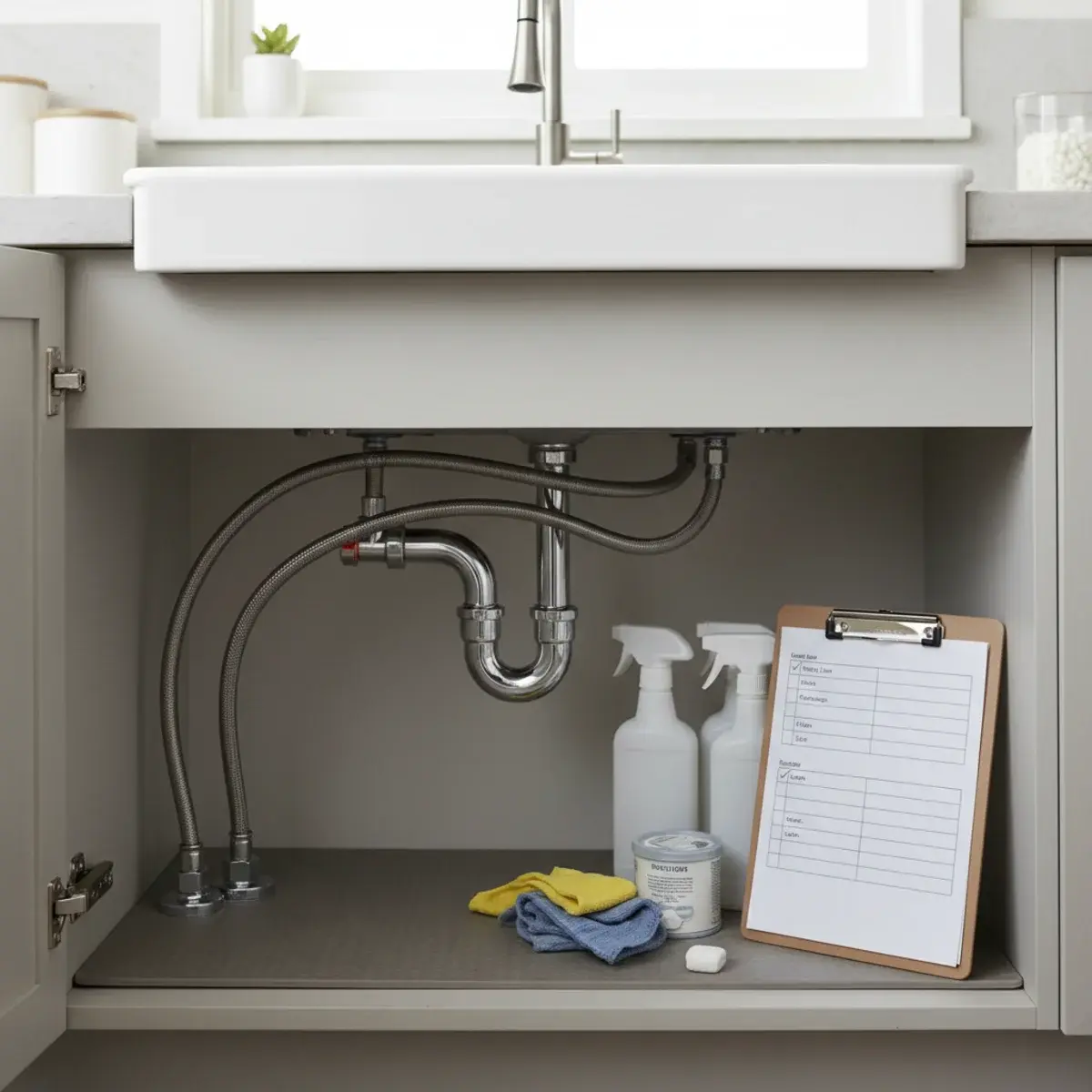
A little kitchen plumbing maintenance prevents most of the problems that send people scrambling for a plumber. Care for the disposal, keep grease out of the drain, check connections for leaks, and manage hard-water scale. Here is the full checklist.
The kitchen is the hardest-working plumbing in most homes, and it is also where a little routine maintenance pays off the most. The vast majority of kitchen plumbing problems — clogged drains, a failing disposal, water-damaged cabinets, scaled-up fixtures — are preventable with simple habits and periodic checks. This checklist covers what to do, how often, and why, so your kitchen plumbing keeps working quietly in the background instead of becoming an emergency.
Daily and ongoing habits
These cost nothing and prevent the most common problems.
Keep grease and oil out of the drain. This is the single most important kitchen plumbing habit. Cooking fats go down as a warm liquid, then cool and harden inside the pipe, building up until they cause a clog. Pour grease into a container — an old can or jar — and throw it in the trash. Wipe greasy pans with a paper towel before washing. Our guide to recurring clogs explains exactly how grease buildup turns into a stubborn, repeating problem.
Use a sink strainer. A simple strainer over the drain catches food scraps, preventing them from accumulating in the trap and line. Empty it into the trash or compost.
Run cold water with the disposal. Always run a steady stream of cold water before, during, and for a few seconds after running the garbage disposal. The cold water keeps any fats solid so they flush through rather than coating the pipe, and it helps the debris move down the line.
Feed the disposal gradually and choose what goes in. Add food waste a little at a time rather than packing it in, and keep fibrous foods (celery, corn husks), starchy items (potato peels, pasta, rice), coffee grounds, eggshells, bones, and pits out of it. These are the things that jam disposals and clog lines; our disposal troubleshooting guide covers what to do when one acts up.
Weekly to monthly tasks
Flush the drain with hot, soapy water. Periodically run hot tap water with a squirt of dish soap down the drain to help keep grease moving and the line clear. This gentle routine is better for your pipes than harsh chemical cleaners.
Clean the disposal. Keep the disposal fresh by grinding a few ice cubes (which helps clean the chamber) and running it with cold water. Citrus peels can help with odor. Avoid harsh chemicals.
Check under the sink. Open the cabinet and look — and feel — for any moisture. Check the supply line connections to the faucet, the drain trap (the curved pipe), and the garbage disposal connections. Look for drips, corrosion, or water staining and warping on the cabinet floor. A flashlight helps. This two-minute check is the best way to catch a small leak before it ruins the cabinet or feeds mold.
Periodic and seasonal checks
Inspect the faucet and fixtures. Watch for drips from the faucet (a worn cartridge or washer), a sprayer that has weakened, and mineral scale on the aerator. In San Bernardino's hard water, the aerator collects scale and restricts flow over time; unscrew it and soak it in vinegar to dissolve buildup and restore the stream. Our low water pressure guide covers how scale affects flow.
Test the shutoff valves. Locate the shutoff valves under the sink and make sure you know where they are and that they turn. Knowing how to quickly shut off water to the kitchen is valuable if a connection ever lets go.
Check the dishwasher connection. If your kitchen has a dishwasher, glance at its supply and drain connections (often routed under the sink) for leaks, and make sure the drain hose is properly secured.
Manage hard-water scale. Because hard water is a constant here, scale is an ongoing maintenance item — on the aerator, in the dishwasher, and on fixtures. Wiping fixtures down and cleaning aerators periodically keeps things working. If scale is a persistent headache throughout the home, treating the water addresses it at the source; our hard-water guide walks through softening and filtration options.
What to watch for between checks
Even with good maintenance, pay attention to early warning signs and act on them:
- A slow-draining sink is the first sign of buildup — address it before it becomes a full clog.
- Gurgling sounds can indicate a partial blockage or a venting issue.
- Any persistent damp smell under the sink suggests hidden moisture.
- A drip you cannot immediately stop at a connection means it is time to investigate or call for help.
When to call a plumber
This checklist prevents and catches a lot, but some things warrant a professional: a clog that will not clear or keeps coming back, a leak you cannot trace or stop, a disposal that has failed beyond the simple resets, water damage already showing in the cabinet, or any fixture replacement you would rather not tackle yourself. Catching problems early through routine checks often means the plumber's visit is a quick, inexpensive fix rather than a major repair.
The bottom line
Kitchen plumbing rewards consistency. Keep grease and the wrong foods out of the drain, run cold water with the disposal, flush the drain gently, and glance under the sink every month or two for leaks. Manage hard-water scale on fixtures and aerators, and know where your shutoffs are. These small, regular actions prevent the clogs, leaks, and disposal failures that otherwise turn into emergencies — keeping your busiest plumbing reliable and your repair calls rare.
Frequently Asked Questions
The biggest single step is to keep grease and oil out of the drain — pour them into a container and throw them away rather than washing them down. Also avoid sending fibrous foods, coffee grounds, eggshells, and starchy items down the drain, use a sink strainer, and run plenty of cold water when using the disposal. These habits prevent the buildup that causes most kitchen clogs.
Hot water can help flush some grease and keep a drain flowing, but boiling water poured directly down can damage certain pipes and fixtures and will not clear an established grease clog on its own. For routine maintenance, hot tap water with a little dish soap is gentler, and for a real clog, mechanical clearing is more effective than relying on hot water.
A quick look under the sink every month or two is good practice. You are checking for drips at the supply line connections, the drain trap, and the garbage disposal, plus any water staining or warping of the cabinet base. Catching a small leak early prevents cabinet damage and mold, which are far more costly to fix than a loose connection.
Need a plumber in San Bernardino?
Call now or request service online and we'll connect you with local plumbing help.