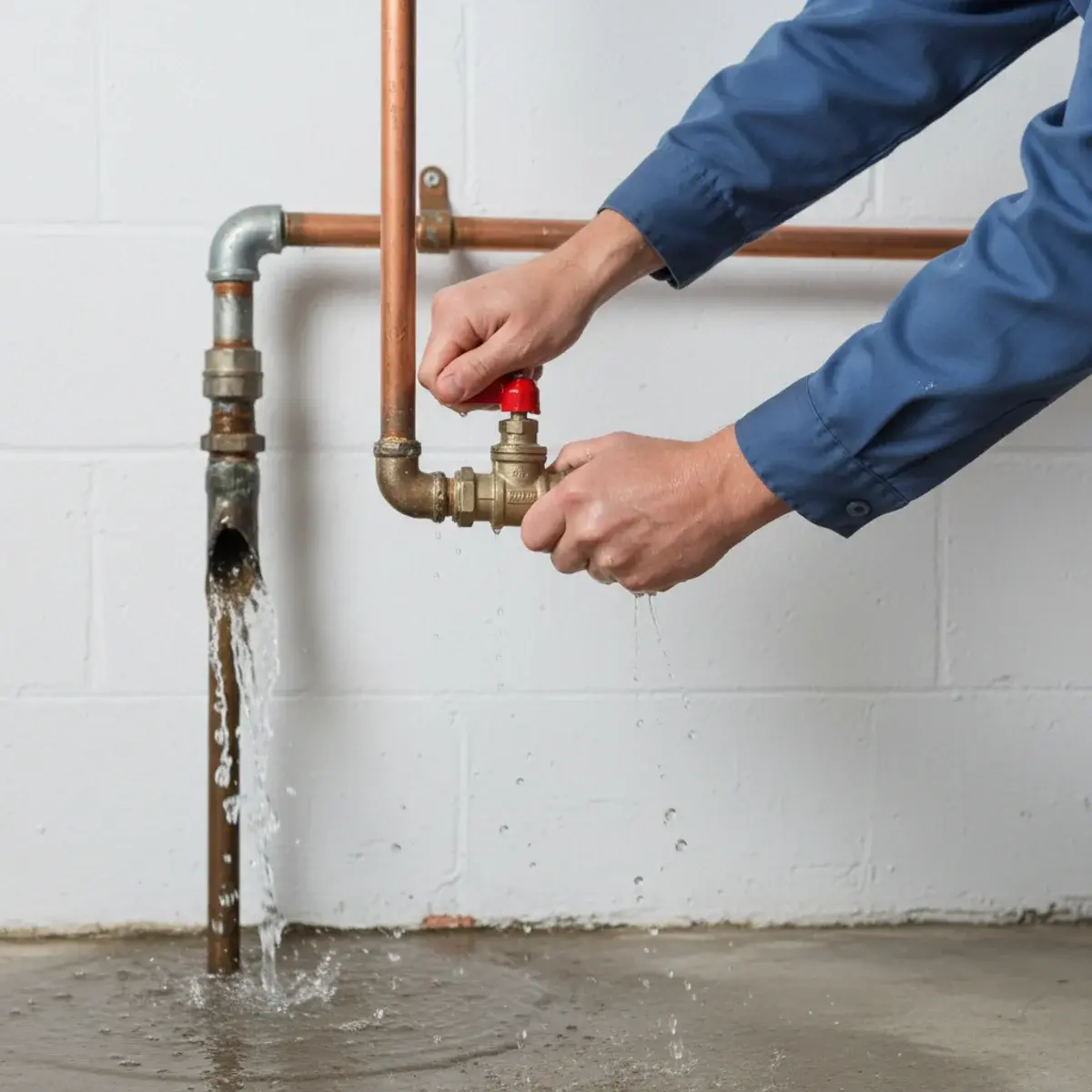
When a pipe bursts, every minute counts. Shut off the main water supply first, cut power near the water, drain the lines, and document the damage. This step-by-step guide walks you through exactly what to do.
When a pipe bursts, water can pour out at a rate that floods rooms and soaks into floors, walls, and belongings within minutes. The right response is fast and methodical: shut off the water, cut nearby power, drain the system, contain the damage, and get a plumber out. Knowing these steps before it happens — and especially knowing where your main shutoff is — turns a potential disaster into a manageable problem.
Step 1: Shut off the main water supply
This is the most important step, and it should be your first move. Go to your main water shutoff valve and close it. This stops more water from feeding the burst and immediately limits the damage. The valve is typically located where the water line enters your home, in a garage or utility area, or near the street at the meter (you may need a meter key for the street valve).
Do this now, before you ever have an emergency: find your main shutoff and make sure you can operate it. In a real burst, you do not want to be hunting for it while water spreads.
If the burst is isolated to one fixture — under a sink or behind a toilet — you may be able to close that fixture's local shutoff instead, but when in doubt, shut off the main.
Step 2: Cut the power near the water
Water and electricity are a dangerous combination. If water is near electrical outlets, appliances, or your panel, turn off the power to those areas at the breaker box — but only if you can reach the panel safely and are not standing in water to do it. If you cannot get to the panel safely, stay clear of the water and call for help. Never enter standing water that may be in contact with live electricity.
Step 3: Drain the lines
After the water is off, open faucets throughout the house, starting with the lowest ones, to drain the remaining water out of the pipes. This relieves pressure in the system and reduces how much water continues to escape from the burst. Flush toilets to clear the tanks as well. Doing this also helps the plumber when they arrive.
Step 4: Contain and remove the water
Now limit the damage from the water already released:
- Move furniture, electronics, rugs, and anything else of value away from the wet area.
- Soak up standing water with towels, a mop, or a wet/dry vacuum if you have one.
- Open windows and run fans to start drying the space, which helps limit mold growth.
- Place a bucket under any active drip and lay down towels to channel water away from rooms you want to protect.
Mold can begin developing in a day or two in wet materials, so getting things dry quickly matters.
Step 5: Document everything
Before and during cleanup, take photos and video of the burst, the water, and the damage to belongings and the home. This documentation is important for an insurance claim. Note the time you discovered the burst and the steps you took, including shutting off the water — demonstrating that you acted to mitigate the damage supports your claim.
Step 6: Call a plumber
With the water off and the immediate situation under control, call a plumber to repair the burst. A burst pipe is a genuine emergency, so a 24/7 plumber is appropriate if it happens at night or on a weekend. Describe what happened, where the burst is, and that you have shut off the water. Ask about the after-hours rate and any trip fee so the price is clear before they are dispatched.
A plumber will locate and repair or replace the failed section, check for related damage, and confirm the cause. If your home has older or corroded plumbing, they can also advise whether the burst is a one-off or a sign that more of the system is nearing the end of its life.
Step 7: Address the underlying cause
Once the emergency is resolved, it is worth understanding why the pipe burst so you can reduce the risk of a repeat:
- Freezing. In the foothill and mountain communities around San Bernardino — places like Crestline and Lake Arrowhead — cold snaps can freeze and burst pipes. Insulating exposed pipes, sealing drafts, and letting faucets drip during hard freezes all help.
- Corrosion and age. Older galvanized or aging pipe weakens over time and is more prone to failure, a common situation in the area's older homes. A repeat burst may signal it is time to consider repiping a section or the whole system.
- High water pressure. Excessive pressure stresses pipes and fittings. A pressure-reducing valve can protect the system.
Be ready before it happens
The households that come through a burst pipe with the least damage are the ones who prepared:
- Know where your main shutoff is and make sure it turns easily.
- Keep a meter key on hand if your shutoff is at the street.
- Know where local fixture shutoffs are under sinks and behind toilets.
- Have a plumber's number saved so you are not searching during a crisis.
A burst pipe is alarming, but a calm, ordered response — water off, power safe, lines drained, damage contained, plumber called — keeps it from becoming a catastrophe. The five minutes you spend today locating your shutoff valve may be the most valuable plumbing maintenance you ever do.
Frequently Asked Questions
Shut off your main water supply immediately. This stops more water from feeding the leak and is the single most important step in limiting damage. Locate your main shutoff valve before an emergency happens so you can act without searching for it under pressure.
Pipes burst from freezing in cold weather, from corrosion and age weakening the pipe wall, from excessive water pressure, and sometimes from physical damage or ground movement. In foothill and mountain communities near San Bernardino, cold snaps can freeze pipes, while older homes are more vulnerable to corrosion-related failures.
Yes, for significant water damage. Many homeowners policies cover sudden, accidental water damage from a burst pipe, though coverage varies. Document everything with photos before cleanup, keep records of the repair, and contact your insurer promptly. Acting quickly to stop the water also helps demonstrate you mitigated the damage.
Need a plumber in San Bernardino?
Call now or request service online and we'll connect you with local plumbing help.