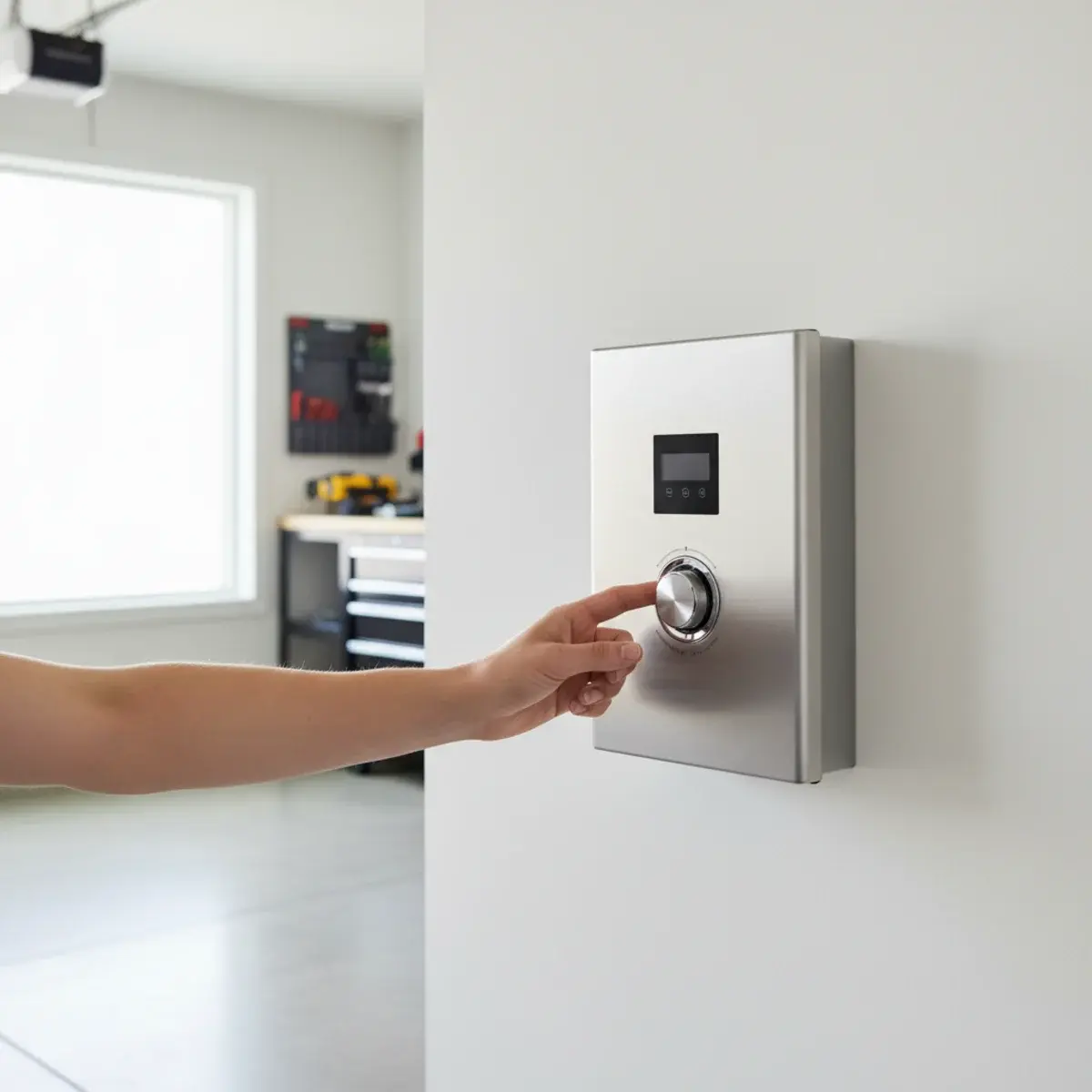
Tankless water heaters deliver hot water on demand, save space, and last longer than tank units — but they cost more upfront, may need electrical or gas upgrades, and are sensitive to hard water. Here is whether the switch makes sense for you.
A tankless water heater heats water on demand as it flows through the unit, rather than keeping a large tank hot around the clock. The headline benefits are real: effectively endless hot water, a longer lifespan, lower standby energy loss, and a much smaller footprint. The trade-offs are equally real: a higher upfront cost, possible electrical or gas upgrades, and real sensitivity to hard water. Whether it is worth it depends on your household, your budget horizon, and your willingness to maintain it.
How a tankless heater works
Instead of storing and continuously reheating 40 to 50 gallons of water, a tankless unit waits until you open a hot tap. Then water flows through a heat exchanger that rapidly raises its temperature, delivering hot water for as long as you need it. When you close the tap, it stops. There is no tank to lose heat overnight and no reservoir to run dry.
The pros
Endless hot water. Because it heats on demand, a correctly sized tankless unit does not run out mid-shower the way a depleted tank does. For larger households or anyone tired of cold-shower roulette, this is the standout benefit.
Longer lifespan. Tankless units commonly outlast tank heaters by a wide margin when maintained, often lasting well beyond the 8-to-12-year range typical of tanks. Over the long run, that can mean replacing one tankless unit instead of two tank units.
Energy savings. A tank heater spends energy keeping water hot even when no one is using it — standby loss. A tankless unit eliminates most of that, so households often see lower water-heating energy use, particularly those with moderate hot-water demand.
Space savings. A tankless unit mounts on a wall and is a fraction of the size of a tank. In a tight garage, closet, or smaller home, reclaiming that floor space is a genuine perk.
Reduced risk of a catastrophic tank leak. There is no large tank to corrode and flood your space. Leaks can still occur at connections, but the classic "tank ruptured and dumped 50 gallons" failure is off the table.
The cons
Higher upfront cost. Both the unit and the installation typically cost more than a comparable tank heater. The gap is the main reason people hesitate, and it is the figure to weigh against the long-term savings.
Possible upgrades. Switching to tankless sometimes requires changes to support it — a larger gas line and adequate venting for a gas unit, or sufficient electrical capacity for an electric unit. These upgrades add to the installed cost and are an important thing to assess before committing.
Flow-rate limits. A tankless unit is limited by how much hot water it can heat per minute, not by a tank's volume. If several fixtures demand hot water simultaneously and exceed the unit's capacity, temperature can dip. Correct sizing — or in some cases multiple units — solves this, but it must be planned for.
Hard-water sensitivity. This is a major consideration locally. Mineral scale from hard water builds up on the heat exchanger, dragging down efficiency and lifespan if it is not managed.
A slight delay and minimum flow. There can be a brief lag before hot water arrives, and very low flows may not trigger heating. These are minor for most users but worth knowing.
The hard-water question in San Bernardino
The Inland Empire's hard water is the single biggest factor in whether a tankless unit thrives here. Scale accumulating on the heat exchanger is the enemy: it reduces efficiency, can trigger error codes, and shortens the unit's life. Two things keep a tankless heater healthy in hard water — periodic descaling (flushing the unit with a descaling solution, often annually) and, ideally, a water softener or scale-prevention system upstream. Many manufacturers even tie warranty coverage to proper maintenance in hard-water conditions. If you switch to tankless here, plan to maintain it; our guide to hard-water plumbing problems covers treatment options that protect it.
Who should switch — and who probably should not
A tankless unit makes sense if you:
- Are frustrated by running out of hot water
- Plan to stay in your home long enough to recoup the higher upfront cost through savings and longevity
- Are short on space
- Are willing to keep up with descaling and, ideally, treat your water
A tank heater may be the better call if you:
- Need the lowest-cost replacement right now
- Are not planning to stay in the home long
- Have a layout or gas/electrical setup that would make a tankless conversion costly
- Prefer the simplicity of a like-for-like swap
The bottom line
Tankless water heaters are an excellent fit for many San Bernardino homes — endless hot water, long life, and energy savings are compelling — but they are not automatically the right choice for everyone. The decision hinges on your budget horizon, your hot-water habits, what upgrades your home would need, and your commitment to maintenance in hard water. If you are already replacing a failing heater and weighing your options, our repair-or-replace guide can help you frame the decision, and a plumber can size and quote both a tank and a tankless option so you can compare them side by side.
Frequently Asked Questions
Effectively yes — a properly sized tankless unit heats water on demand as it flows through, so it will not run out the way a tank does. The limit is flow rate rather than volume: if too many fixtures draw hot water at once and exceed the unit's capacity, the temperature can drop, which is why correct sizing matters.
It depends on your priorities. They cost more to buy and install but last longer, use less energy, and free up space. Households that value endless hot water, plan to stay in the home long enough to recoup the savings, or are tight on space tend to find them worthwhile. For a short-term, budget-driven replacement, a tank unit may make more sense.
Yes, significantly. Hard water causes mineral scale to build up on the heat exchanger, reducing efficiency and lifespan. In hard-water areas like San Bernardino, periodic descaling and often a water softener or scale-prevention system are important to protect a tankless unit and keep its warranty valid.
Need a plumber in San Bernardino?
Call now or request service online and we'll connect you with local plumbing help.