Hard water is a fact of life in San Bernardino, and over time it scales up pipes, shortens water heater life, clogs aerators and showerheads, and leaves spots everywhere. Here is what hard water does to your plumbing and the solutions that actually help.
San Bernardino has hard water — water that carries a high concentration of dissolved minerals, mainly calcium and magnesium. Those minerals are harmless to drink, but they do not stay dissolved forever. They precipitate out as scale, and that scale is what quietly degrades plumbing across the Inland Empire: it lines pipes, builds up in water heaters, clogs fixtures, stiffens valves, and shortens the life of every appliance that uses water. Understanding what hard water does, and what genuinely helps, lets you protect your home rather than fight the symptoms one at a time.
What "hard water" actually means
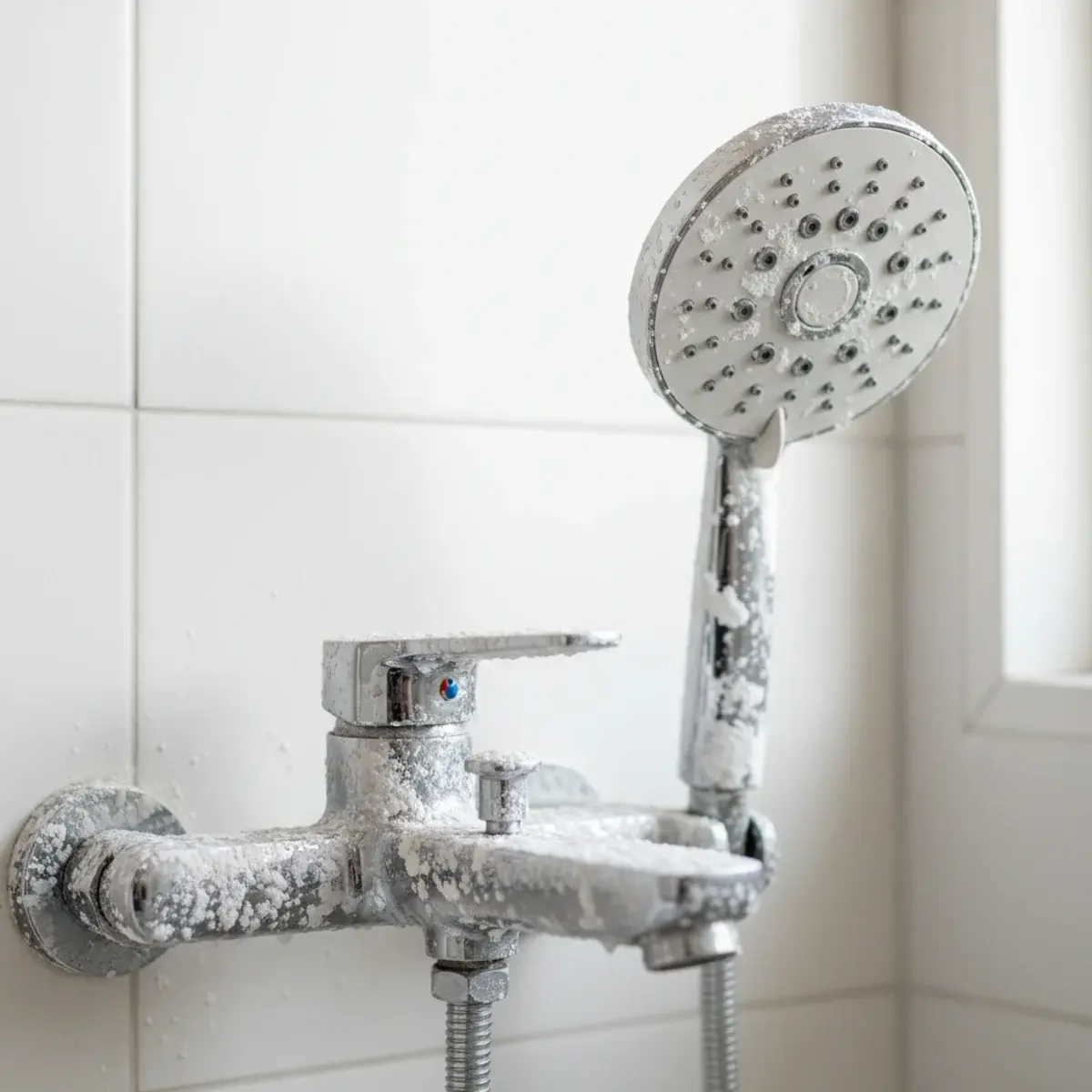
Water hardness is simply a measure of dissolved mineral content. As water moves through the ground and local supply, it picks up calcium and magnesium. The more it carries, the harder it is. When hard water evaporates, sits, or — most importantly — gets heated, those minerals come out of solution and deposit as a chalky, off-white scale. That is the white crust you see on faucets and the buildup that accumulates out of sight inside your plumbing.
The problems hard water causes
Scale buildup inside pipes. Over years, mineral scale coats the interior of pipes, gradually narrowing them. This reduces flow and contributes to declining water pressure, and in older homes with already-aging pipe it compounds the effects of corrosion. Our guide to low water pressure covers how scale fits into the bigger pressure picture.
Shortened water heater life. This is one of the most significant impacts. In a tank water heater, minerals settle to the bottom as sediment, where they insulate the burner or element from the water. The heater has to work harder, runs less efficiently, makes the rumbling or popping noises many people notice, and wears out sooner than it would on soft water. Tankless units are affected too — scale builds up on the heat exchanger and must be flushed periodically. Either way, hard water is the reason water heaters in San Bernardino often need more attention and may not reach the top of their expected lifespan; our repair-or-replace guide factors this in.
Clogged aerators, showerheads, and fixtures. The little screens and nozzles on faucets and showerheads collect scale quickly, which weakens and distorts their spray and is a common cause of low pressure at a single fixture. Valves and moving parts in faucets and toilets also stiffen and wear as scale accumulates.
Reduced appliance efficiency and life. Dishwashers, washing machines, and any appliance with heating elements or small water passages suffer from scale, which lowers their efficiency and shortens their service life.
Poor soap performance and spotting. Hard water reacts with soap to form scum, so soap and detergent lather less and clean less effectively, and you may use more of them. It also leaves spots and film on dishes, glassware, fixtures, and shower glass, and can leave skin and hair feeling filmy.
The solutions that actually help
A water softener. The most comprehensive solution is a water softener, which removes the calcium and magnesium that cause hardness (traditional softeners use an ion-exchange process). By treating the water before it reaches your plumbing, a softener attacks the root cause: it protects pipes from scale, extends water heater and appliance life, improves soap performance, and eliminates most spotting and film. For many San Bernardino homeowners, the long-term protection makes a softener worthwhile, though the right choice depends on your home and budget.
Salt-free conditioners and scale-prevention systems. As an alternative to traditional softeners, salt-free conditioning systems alter how minerals behave so they are less likely to form hard scale, without removing them. These do not produce the slick feel of softened water and work differently than ion-exchange softeners, but they can reduce scale buildup and are an option worth discussing.
Whole-house filtration. A whole-house filtration system can address sediment, chlorine taste and odor, and other water quality concerns. Filtration and softening solve different problems and are often paired — filtration for quality and taste, softening for hardness and scale.
Regular maintenance. Whatever treatment you choose (or if you choose none), maintenance limits hard-water damage:
- Flush your water heater periodically to clear sediment from a tank, and descale a tankless unit on schedule.
- Clean aerators and showerheads by soaking them in vinegar to dissolve scale and restore flow.
- Wipe down fixtures and shower glass to prevent buildup.
- Have aging pipes assessed if pressure has declined over years; in older homes, scale plus corrosion sometimes makes repiping the long-term answer, which our repiping guide explains.
Putting it together for a San Bernardino home
The practical approach is to treat hard water as a known local condition and plan around it rather than reacting to each symptom. If you are installing a new water heater — especially a tankless unit — pairing it with treatment protects your investment and helps preserve the warranty. If your pressure is slipping or your fixtures keep clogging, scale is a prime suspect. And if you are tired of spotting, filmy skin, and underperforming soap, a softener addresses all of it at once. A local plumber can test your water, explain the softening and filtration options that fit your home, and set up the maintenance that keeps everything running.
The bottom line
Hard water is unavoidable in San Bernardino, but its damage is not. The minerals that make the water hard form scale that lines pipes, shortens water heater life, clogs fixtures, and dulls soap. The solutions — a water softener, salt-free conditioning, whole-house filtration, and consistent maintenance — range from comprehensive treatment to simple upkeep. Choosing the right combination for your home protects your plumbing, extends the life of your appliances, and makes everyday water simply work better.
Frequently Asked Questions
Yes. San Bernardino and much of the Inland Empire are known for hard water, meaning the water carries a high level of dissolved minerals like calcium and magnesium. These minerals are not a health concern, but they cause scale buildup that affects pipes, water heaters, fixtures, and appliances throughout local homes.
The dissolved minerals in hard water precipitate out as scale, especially where water is heated or where it sits. Over time scale coats the inside of pipes and water heater tanks, clogs aerators and showerheads, stiffens valves, and reduces the efficiency and lifespan of water-using appliances. It also makes soap less effective and leaves spots and film.
For many homeowners here, yes. A water softener removes the minerals that cause scale, which protects pipes, extends water heater and appliance life, improves soap performance, and reduces spotting. Whether it is worth it depends on your home and budget, but in a hard-water area the long-term protection it offers is a meaningful benefit.
Need a plumber in San Bernardino?
Call now or request service online and we'll connect you with local plumbing help.