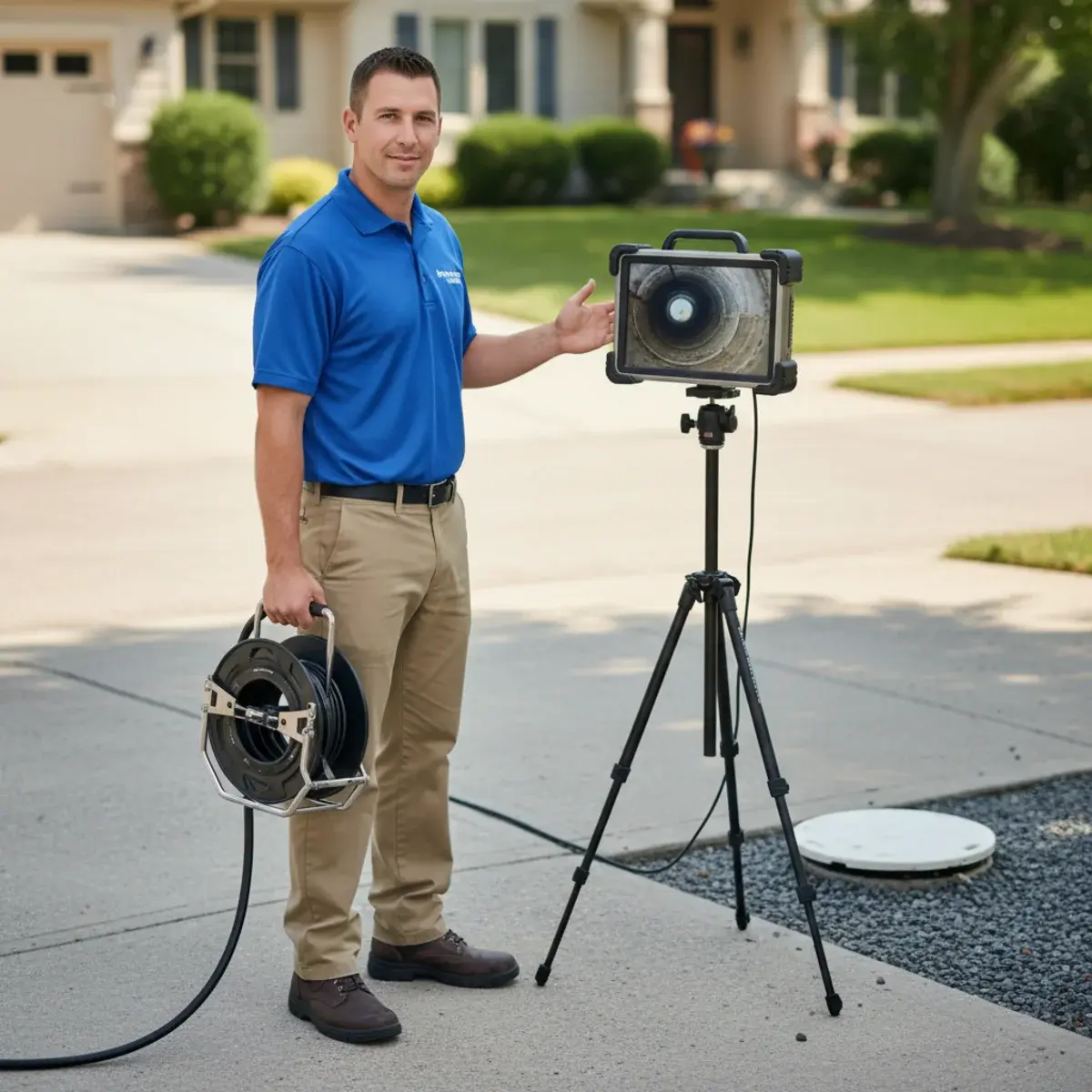
A sewer camera inspection sends a waterproof camera through your sewer line so a plumber can see roots, cracks, bellies, and blockages directly — turning guesswork into a precise diagnosis. Here is when it is worth doing.
A sewer camera inspection is exactly what it sounds like: a plumber sends a small, high-resolution waterproof camera on a flexible cable through your sewer line and watches a live video feed of the pipe's interior. Instead of guessing why a line keeps backing up, you get to see the actual condition inside — roots, cracks, grease, sagging sections, or a collapse — and know precisely where the problem is. It is one of the most useful diagnostic tools in modern plumbing, and it prevents a lot of unnecessary digging.
How the inspection works
The process is straightforward and non-destructive:
- The plumber accesses the sewer line, usually through a cleanout — a capped access point on the line — or occasionally through a removed toilet or roof vent.
- A cable with a camera on the tip is fed into the line. The camera sends real-time video to a monitor the plumber watches as the cable advances.
- As the camera travels, the plumber notes the pipe material, the flow, and any defects. A built-in light illuminates the interior.
- A locating transmitter on the camera lets the plumber pinpoint the exact depth and ground position of a problem using a receiver above ground — so if a repair is needed, they know precisely where to dig.
The whole inspection typically takes well under an hour for an accessible line, and you can often watch the footage yourself.
What a camera inspection reveals
Seeing inside the pipe answers questions that surface symptoms only hint at:
- Tree root intrusion. Roots entering through joints or cracks are the most common find in older neighborhoods. The camera shows how extensive the mass is and where it enters.
- Cracks, breaks, and collapses. Aging clay, cast iron, or Orangeburg pipe can crack or fail. The camera distinguishes a minor crack from a section that has collapsed.
- Bellies (low spots). A section of pipe that has sagged collects water and waste, causing recurring clogs. This is invisible from inside the house but obvious on camera.
- Grease and scale buildup. The camera shows how much the pipe's interior has narrowed.
- Offset or separated joints. Shifting soil can pull pipe sections out of alignment, snagging debris.
- Foreign objects and prior bad repairs. Sometimes the culprit is something lodged in the line or a previous patch that has failed.
When you should get one
A camera inspection is worth doing in several common situations:
Recurring or whole-house backups. When drains back up repeatedly or multiple fixtures back up at once, the problem is usually in the main line. A camera finds out why before you spend money on repeated clearings.
Before buying a home. This is one of the highest-value inspections a buyer can get. Standard home inspections almost never include the sewer line, yet a failed sewer is among the costliest repairs you can inherit. In areas with older housing stock and mature trees — much of San Bernardino — an inspection before purchase is especially wise. It can reveal roots or a deteriorating line while you still have negotiating leverage.
After a sewer cleaning. Once a line is cleared, an inspection confirms the cause and shows whether the pipe itself is damaged or simply needed cleaning.
Before a remodel or landscaping project. Knowing the line's condition and exact location prevents nasty surprises when you are building or planting over it.
Persistent odors or soggy spots in the yard. A leaking sewer line can cause sewage smells and unexplained wet or unusually lush patches of lawn. A camera, paired with locating, confirms it.
What you gain from the footage
The real value of a camera inspection is that it converts an expensive guessing game into a targeted decision. Without it, a plumber clearing a chronic backup is working blind and may recommend repeated cleanings or exploratory digging. With it, you know whether you are dealing with roots that can be cut and jetted, a buildup that hydro jetting will resolve, a single bad section that can be spot-repaired, or a deteriorated line that needs replacement. That clarity often saves far more than the inspection costs.
What it costs and how to think about value
Pricing depends on the company and how easy the line is to access, but a standalone inspection is generally a small fraction of any repair it might inform. Many plumbers fold the inspection into the cost of diagnosing a backup or planning a repair, sometimes crediting it toward the work. Always ask for the price upfront, and ask whether you will receive a copy of the footage — reputable companies are happy to share it.
The bottom line
If your sewer line is giving you recurring trouble, you are about to buy an older home, or you are planning work over the line, a camera inspection is one of the smartest plumbing investments available. It replaces guesswork with a clear picture, ensures any repair is aimed at the real problem, and frequently prevents both unnecessary digging and unpleasant surprises down the road.
Frequently Asked Questions
A plumber feeds a flexible cable with a high-resolution waterproof camera on the tip into your sewer line, usually through a cleanout. The camera transmits live video so the plumber can see the inside of the pipe in real time, and a locating device can pinpoint the depth and position of any problem from above ground.
It is strongly recommended, especially for older homes. A standard home inspection rarely includes the sewer line, yet sewer repairs are among the most expensive surprises a buyer can face. A camera inspection reveals roots, cracks, or collapse before you commit, giving you room to negotiate or walk away.
Costs vary by company and by how accessible the line is, but a standalone camera inspection is typically a modest fraction of what a repair would cost. Many plumbers include or credit the inspection when it is performed as part of diagnosing a backup or planning a repair. Ask for the price upfront.
Need a plumber in San Bernardino?
Call now or request service online and we'll connect you with local plumbing help.