A garbage disposal that hums but will not turn is usually jammed; one that is silent has likely tripped its reset or lost power. Most disposal problems have safe, simple fixes — here is how to work through them step by step.
When a garbage disposal stops working, the symptom tells you a lot about the cause. A unit that hums but does not turn is jammed. A unit that is completely silent has lost power or tripped its reset. A unit that runs but will not drain has a clog downstream. And a leaking unit has a problem at a connection or in the housing itself. Most of these have safe, do-it-yourself fixes — provided you follow one rule above all others: never put your hand inside the disposal.
Safety first
Before troubleshooting anything, make sure the disposal is switched off, and for any work near the grinding chamber, cut power to it at the breaker or unplug it under the sink. The blades — technically impellers — can cause serious injury. Use tools, not fingers, inside the chamber. With that rule firmly in mind, here is how to diagnose by symptom.
Symptom: it hums but does not spin
This is the most common complaint, and it almost always means the disposal is jammed. Something — a fruit pit, a piece of bone, silverware, or fibrous debris — is wedged between the impellers and the chamber wall, so the motor energizes (the hum) but cannot turn.
To fix it:
- Turn the disposal off at the switch.
- Free the rotor manually. Most disposals come with a small hex (Allen) wrench. There is a hex-shaped socket in the center of the bottom of the unit. Insert the wrench and turn it back and forth to manually rotate the impeller plate and break the jam free. If you lost the wrench, a 1/4-inch Allen key usually fits.
- Remove the obstruction. With the power off, look into the chamber with a flashlight and remove whatever is stuck using tongs or pliers — never your hand.
- Let it cool and reset. Press the reset button on the underside (see below), then restore power and test with water running.
Leaving a disposal humming while jammed can burn out the motor, so switch it off promptly when you hear that sound.
Symptom: it is completely silent
If the disposal makes no sound at all, it is not getting power or has tripped its internal overload protection.
- Check the switch and that it is plugged in. Confirm the wall switch works and the unit is plugged in under the sink (some are hardwired).
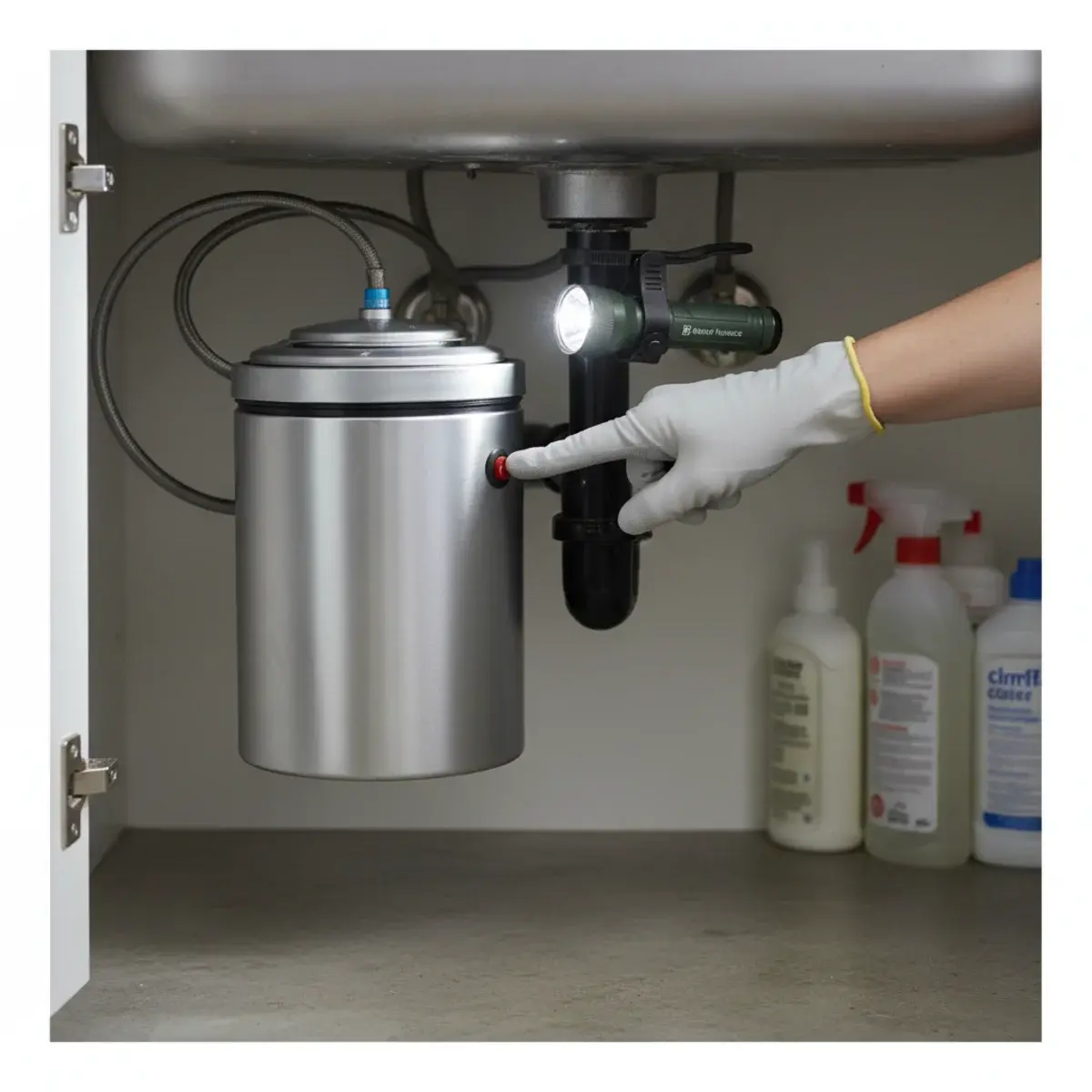
- Press the reset button. Disposals have a small (usually red) reset button on the bottom. If the unit overheated or overloaded, this button pops out and cuts power. Switch the disposal off, press the button in firmly, and try again.
- Check the breaker. If the reset will not hold or the unit is still dead, check your electrical panel for a tripped breaker and reset it.
- Address any underlying cause. If it tripped because of a jam, clear the jam first, or it will simply trip again.
If it remains dead after the reset, breaker, and power checks, the motor or wiring may have failed, which is a repair or replacement situation.
Symptom: it runs but will not drain
If the disposal spins normally but water backs up or drains slowly, the problem is a clog downstream of the unit, not the disposal itself. The drain trap or the line beyond it is blocked — often by accumulated food debris, grease, or starchy material that the disposal ground up but that then settled in the pipe.
Turn the disposal off and try clearing the trap and drain line. Avoid harsh chemical drain cleaners, which can sit against the disposal and pipes and cause problems. If the clog persists, it may be farther down the line; our guide to recurring clogs explains how to identify deeper drainage issues.
Symptom: it leaks
Leaks come from a few predictable places, and the location tells you the fix:
- From the top (sink flange): the seal where the disposal mounts to the sink may have loosened or failed, and the mounting and putty seal may need to be redone.
- From the side connections: the dishwasher hose or the drain pipe connection can loosen; these can often be tightened or resealed.
- From the bottom of the unit: a leak from the body of the housing usually means an internal seal has failed and the disposal is at the end of its life — replacement is the fix.
When to call a plumber
Many disposal problems are squarely do-it-yourself: freeing a jam, pressing the reset, and tightening a loose connection are all reasonable to handle. Call a plumber when the unit is dead after you have checked power, the reset, and the breaker; when it leaks from the bottom housing; when a downstream clog will not clear; or when you would simply prefer a professional to replace a failed unit and confirm the connections and seals are right. Replacing a disposal also involves the electrical and drain connections, so it is a common job to hand off.
Keep it healthy
A few habits prevent most disposal trouble: run cold water before, during, and after use; feed waste in gradually rather than all at once; avoid grease, fibrous foods, pits, bones, and starchy items that swell; and grind a bit of ice periodically to help keep the chamber clean. Our kitchen plumbing maintenance guide rounds out the routine. Treat the disposal gently and it will give you years of quiet service.
Frequently Asked Questions
A humming sound with no spinning almost always means the disposal is jammed — something is stuck between the impellers and the grinding chamber. Turn the disposal off, and never put your hand inside. Use the hex wrench in the bottom socket to manually free the rotor, then remove the obstruction once the unit is off and clear.
Most disposals have a small red reset button on the underside of the unit. If the disposal is dead and silent, switch it off, then press that reset button in. If it does not stay in or trips again immediately, there may be a deeper electrical issue or the unit may be overloaded — let it cool and address any jam first.
Leaks typically come from one of a few spots: the sink flange at the top where the disposal meets the sink, the dishwasher or drain pipe connections on the side, or the bottom of the unit. Leaks at connections can sometimes be tightened or resealed; a leak from the bottom of the housing usually means the unit has failed internally and needs replacement.
Need a plumber in San Bernardino?
Call now or request service online and we'll connect you with local plumbing help.