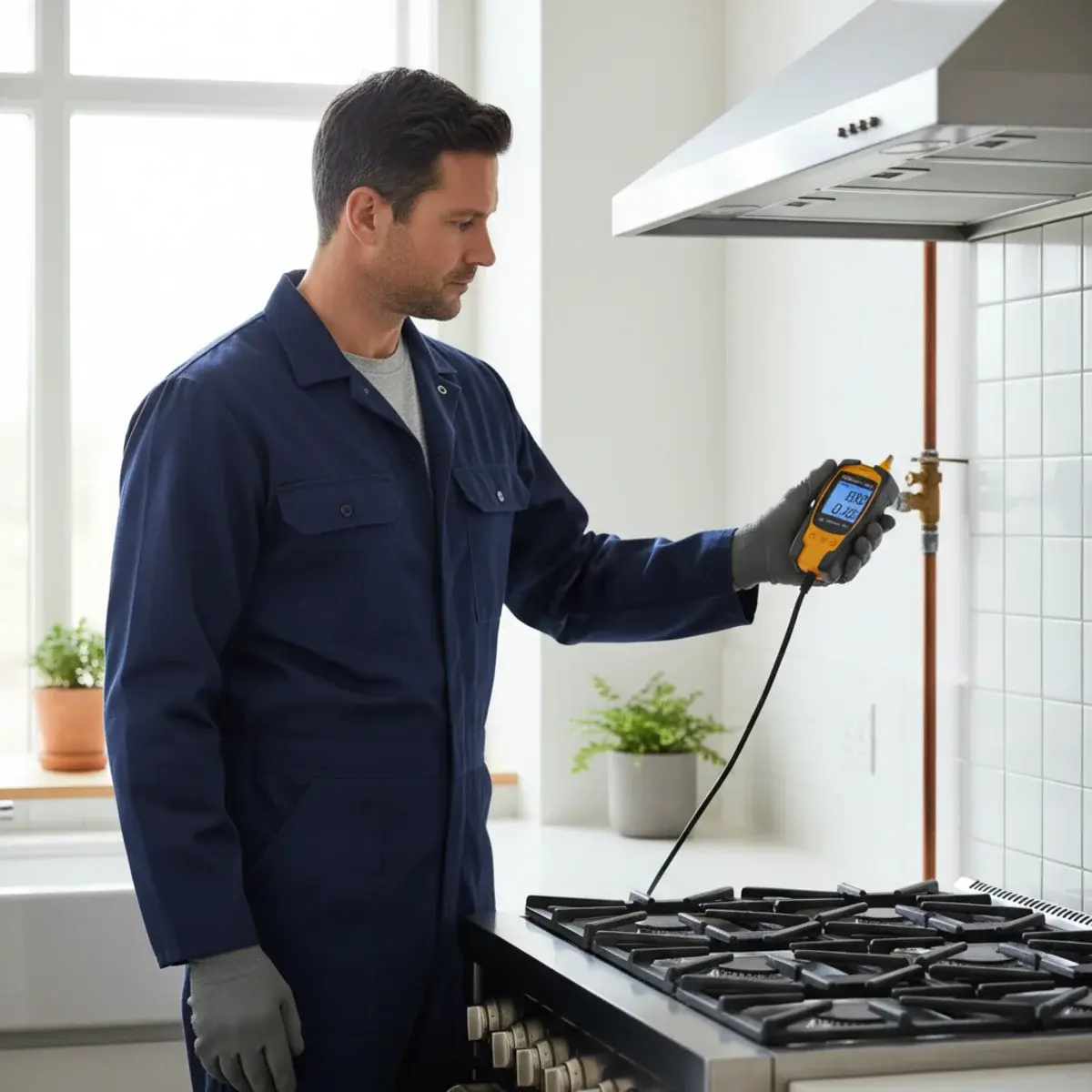
A gas leak can be dangerous, and recognizing it quickly matters. The classic sign is a rotten-egg odor, but hissing sounds, dead vegetation, and physical symptoms are warnings too. If you suspect a leak, leave first and call for help from a safe distance.
A gas leak is a safety hazard that deserves immediate, decisive action — and the most important thing to know is the order of operations: if you suspect a leak, get out first, then call for help from a safe distance. The classic warning sign is a rotten-egg or sulfur smell, but there are others, including hissing sounds, dying vegetation, and physical symptoms. This guide covers what to watch for and exactly what to do, because with gas, acting correctly in the first minute matters most.
Why gas leaks are serious
Natural gas is both a fire and explosion hazard and, in high concentrations, a health risk because it can displace oxygen. That combination is why gas leaks are treated as emergencies. The encouraging part is that gas leaks are usually detectable if you know the signs, and a fast, correct response keeps people safe.
The warning signs
The rotten-egg smell. Natural gas is odorless on its own, so utilities add a chemical called mercaptan that smells like rotten eggs or sulfur specifically so leaks can be smelled. This is the most reliable and common warning sign. If you catch that distinctive odor, do not rationalize it away — treat it as a potential leak.
A hissing or whistling sound. Gas escaping from a line or fitting under pressure can make a hissing, whistling, or roaring sound near a gas appliance, meter, or along a line. An unexplained hiss near anything gas-related is a red flag.
Dead or dying vegetation. A leak in a buried gas line can kill the plants above it. A patch of dead grass, shrubs, or a plant that is wilting for no clear reason — especially over the path of a gas line — can indicate an underground leak.
Bubbles in standing water. If there is a puddle, wet ground, or standing water over a buried line, escaping gas can cause persistent bubbling.
Physical symptoms. Exposure to a gas leak can cause headaches, dizziness, nausea, fatigue, or difficulty breathing. If several people — or pets — in a building feel unwell at the same time and improve when they leave, that pattern is a warning. A higher-than-normal gas bill with no change in usage can also hint at a leak.
A pilot light that keeps going out or a gas flame that burns orange or yellow instead of blue can also indicate a problem worth investigating.
What to do if you suspect a leak
The steps below are in order for a reason. With a possible gas leak, the priority is to avoid creating any spark and to get to safety before doing anything else.
- Leave immediately. Get yourself, everyone else, and pets out of the building and away from the area. Do not stop to gather belongings.
- Do not create a spark or flame. Do not flip light switches on or off, do not unplug or use appliances, do not use phones inside, and do not light matches or lighters. Any of these can ignite gas.
- Do not start vehicles in an attached garage or near the suspected leak.
- If you can do so safely and quickly on your way out, open a door, but do not delay your exit to ventilate.
- From a safe distance away from the building, call for help — your gas utility's emergency line or 911. Use a phone only once you are outside and clear of the area.
- Do not go back inside until the utility or emergency responders confirm it is safe.
This sequence is the one case in plumbing where you should not call a plumber first. Make the situation safe through the utility and emergency services, and only then arrange repairs.
Who repairs a gas line
Once the immediate hazard is handled, the gas utility will typically shut off service and confirm the source. Repairing or replacing the gas line or fitting itself is work for a qualified, licensed professional. Gas line work is hazardous and heavily regulated, and it is never an appropriate do-it-yourself task. A licensed pro will repair or replace the affected line, pressure-test it to confirm it is sealed, and ensure the work meets code before gas service is restored.
Reducing the risk
While you cannot prevent every problem, a few practices lower your risk:
- Have gas lines and connections inspected if you have an older home, are buying a property, or are adding a gas appliance.
- Use licensed professionals for any gas work, including running a line to a new range, water heater, or outdoor appliance.
- Pay attention to your appliances. A flame that turns yellow, a pilot that will not stay lit, or unusual smells around a gas appliance warrant a look.
- Consider a gas detector for added peace of mind, particularly near gas appliances.
The bottom line
With a suspected gas leak, the right response is simple to remember and critical to follow: leave first, avoid anything that could spark, and call for help from a safe distance. The rotten-egg smell is your most common warning, but hissing, dead vegetation, and feeling unwell are signals too. Treat any of them seriously. Once the area is confirmed safe, a licensed professional handles the repair — gas work is not the place to take chances.
Frequently Asked Questions
Natural gas is naturally odorless, so utilities add a chemical called mercaptan that smells like rotten eggs or sulfur to make leaks detectable. If you notice that distinctive rotten-egg smell, treat it as a possible gas leak and act on it immediately rather than dismissing it.
Leave the area immediately and take others with you. Do not use light switches, appliances, phones, or anything that could create a spark, and do not light a flame. Once you are safely away from the building, call your gas utility's emergency line or 911. Only after the area is confirmed safe should repair work begin.
Your gas utility responds to make the immediate situation safe and will typically shut off service. Repairing or replacing the gas line itself is work for a qualified, licensed professional. Gas line work is hazardous and regulated, so it should never be a do-it-yourself project.
Need a plumber in San Bernardino?
Call now or request service online and we'll connect you with local plumbing help.