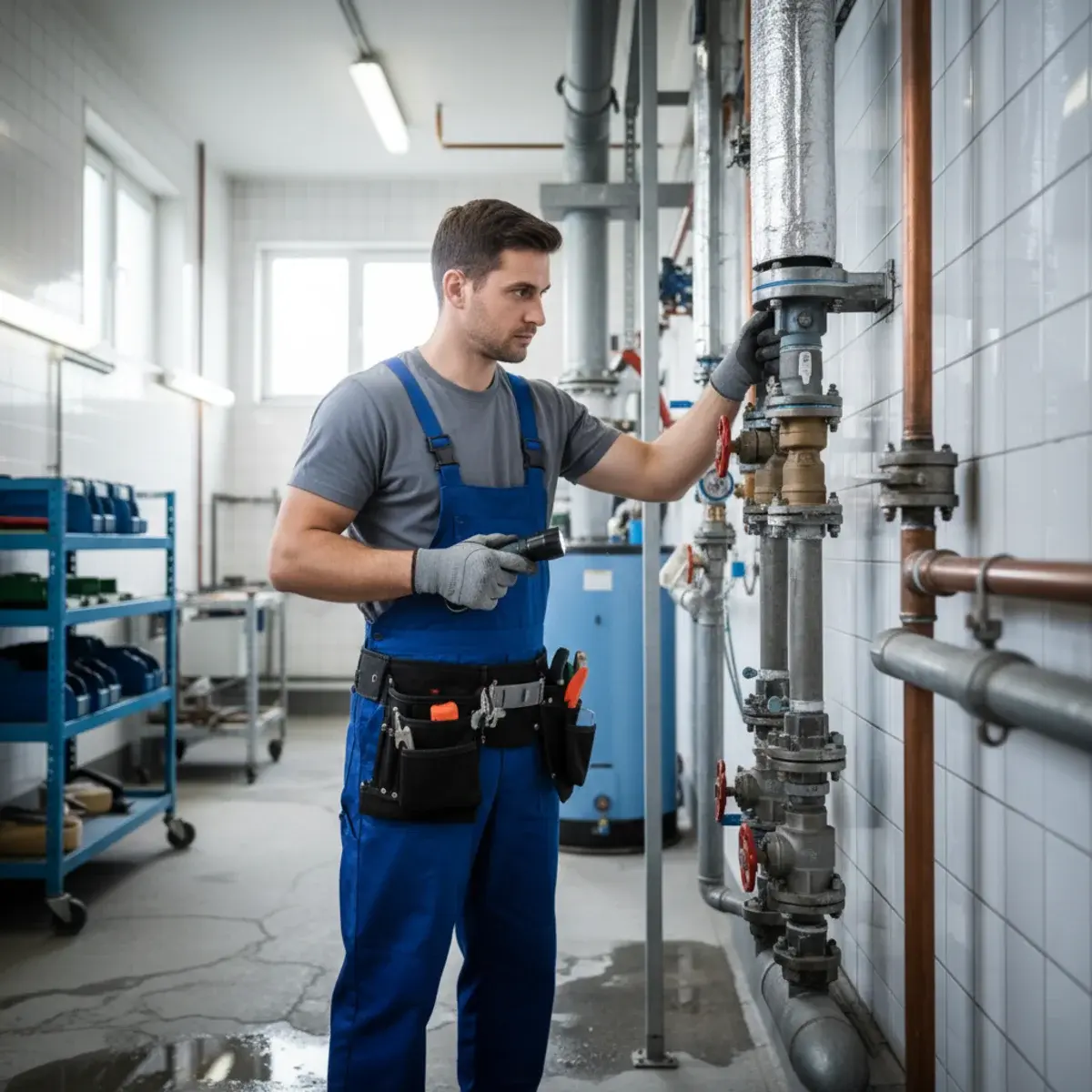
For a business, a plumbing failure is not just an inconvenience — it can shut you down and cost real money. Preventive commercial plumbing maintenance keeps restrooms, kitchens, and water systems running and catches problems before they become emergencies. Here is what it involves.
For a business, plumbing is infrastructure — and when it fails, the cost is measured in downtime, lost revenue, health-code exposure, and property damage, not just a repair bill. A backed-up restroom can close a restaurant; a water heater failure can halt operations; a hidden leak can damage inventory and the building. Preventive commercial plumbing maintenance exists to keep those failures from happening during business hours. This guide covers what commercial maintenance involves, the problems it heads off, and how to build a sensible plan.
Why commercial plumbing is different
Commercial plumbing endures far more demand than residential plumbing. Many more people use the fixtures, restrooms see constant traffic, kitchens push enormous volumes of water and waste through the lines, and water heaters work hard to keep up. That volume accelerates wear: drains that would last for years in a home clog far sooner under commercial load, and small issues escalate quickly because the system rarely gets a rest. On top of that, businesses carry obligations homes do not — health and safety codes, accessibility requirements, and the simple fact that a closure costs money every hour. All of this makes prevention, rather than reaction, the smart strategy.
What commercial plumbing maintenance involves
A thorough maintenance program typically covers several areas:
Drain and sewer line maintenance. High-use drains and sewer lines are the most common source of commercial plumbing emergencies. Regular drain cleaning — and, for lines prone to grease or scale buildup, periodic hydro jetting — keeps them flowing and prevents the backups that shut down restrooms and kitchens. For restaurants especially, keeping grease lines clear is critical; our guide to recurring clogs explains how grease buildup becomes a repeating problem. Camera inspections of sewer lines catch developing issues like roots or deterioration before they cause a backup.
Water heater service. Commercial water heaters work hard, and in a hard-water area like San Bernardino they accumulate sediment and scale that reduce efficiency and shorten their life. Regular flushing and inspection keep them reliable and help avoid the operational disruption of a sudden failure.
Leak detection and fixture checks. Across a building with many fixtures, leaks and running toilets are easy to miss and quietly waste water and money. Routine inspection of fixtures, supply lines, and connections catches leaks early — protecting the building and controlling water costs. Our guide to spotting hidden leaks covers the warning signs that apply to commercial properties too.
Backflow prevention and water quality. Many commercial properties have backflow prevention requirements to protect the water supply, and these devices need periodic testing. Hard-water scale also affects commercial equipment, so water treatment and filtration may be part of keeping kitchen and process equipment running well.
Restroom and kitchen fixtures. Commercial restrooms and kitchens have fixtures that take heavy use — faucets, flush valves, disposals, grease management. Keeping them maintained prevents the small failures that add up to a poor customer experience or a code problem.
What business owners should watch for
Between scheduled visits, staff awareness helps catch problems early:
- Slow or gurgling drains anywhere — an early sign of a developing clog.
- Recurring clogs or backups, which point to a line problem that needs more than repeated clearing.
- Running or leaking fixtures, which waste water and signal worn parts.
- Reduced hot water or inconsistent temperature, which can indicate a struggling water heater.
- Unexplained increases in the water bill, often the first sign of a hidden leak.
- Damp spots, stains, or odors, which suggest leaks or sewer issues.
- Low water pressure, which can stem from scale, leaks, or supply problems.
Empowering staff to report these early — and having a plumber's number ready — turns potential emergencies into routine fixes.
Building a maintenance plan
The right plan depends on your type of business, but the principles are consistent:
- Match the schedule to the demand. A regular cadence — often annual inspections, with more frequent drain maintenance for restaurants and high-use facilities — keeps ahead of wear. Heavy water users and older buildings warrant more frequent attention.
- Prioritize the high-risk systems. Drains, sewer lines, grease management, and water heaters cause the most disruptive failures, so they deserve the most consistent maintenance.
- Document and track. Keep records of inspections, cleanings, and repairs so you can see patterns and plan replacements before failures.
- Plan for water treatment where hard water affects your equipment; our hard-water guide covers the options that protect commercial systems.
- Have an emergency plan. Know where your main shutoffs are, make sure staff know too, and have a relationship with a plumber who can respond quickly, including after hours.
The cost of prevention versus the cost of failure
The case for commercial maintenance is fundamentally economic. A scheduled drain cleaning or water heater flush is a modest, predictable expense. An unplanned failure during business hours is not — it can mean lost revenue from a closure, emergency-rate repairs, possible health-code consequences, and property damage all at once. Preventive maintenance trades a small, controllable cost for protection against a large, uncontrollable one, while keeping your operation running smoothly day to day.
The bottom line
For a business, plumbing reliability is operational reliability. Commercial systems take heavy use and fail faster than residential ones, and a failure costs far more than a repair bill. A preventive maintenance program — regular drain and sewer service, water heater upkeep, leak and fixture checks, backflow testing, and hard-water management — keeps restrooms and kitchens open and heads off emergencies before they disrupt your business. Matching the plan to your demand and partnering with a plumber who can respond quickly is one of the more cost-effective investments a business can make in keeping its doors open.
Frequently Asked Questions
For a business, plumbing problems can force closures, disrupt operations, create health-code issues, and damage the property — all of which cost money and reputation. Preventive maintenance catches small problems before they become failures, keeps restrooms and kitchens operating, and reduces the risk of an emergency shutdown during business hours.
It depends on the type and size of the business, but a regular schedule — often annually, and more frequently for high-demand operations like restaurants — is sound practice. Businesses with heavy water use, commercial kitchens, or older buildings benefit from more frequent inspections and drain maintenance to keep up with the load.
Common commercial issues include clogged and slow drains from heavy use, grease buildup in restaurant lines, water heater strain from high demand, leaks and running fixtures across many restrooms, sewer line problems, and hard-water scale affecting equipment. The high volume of use in commercial settings accelerates wear compared to a typical home.
Need a plumber in San Bernardino?
Call now or request service online and we'll connect you with local plumbing help.