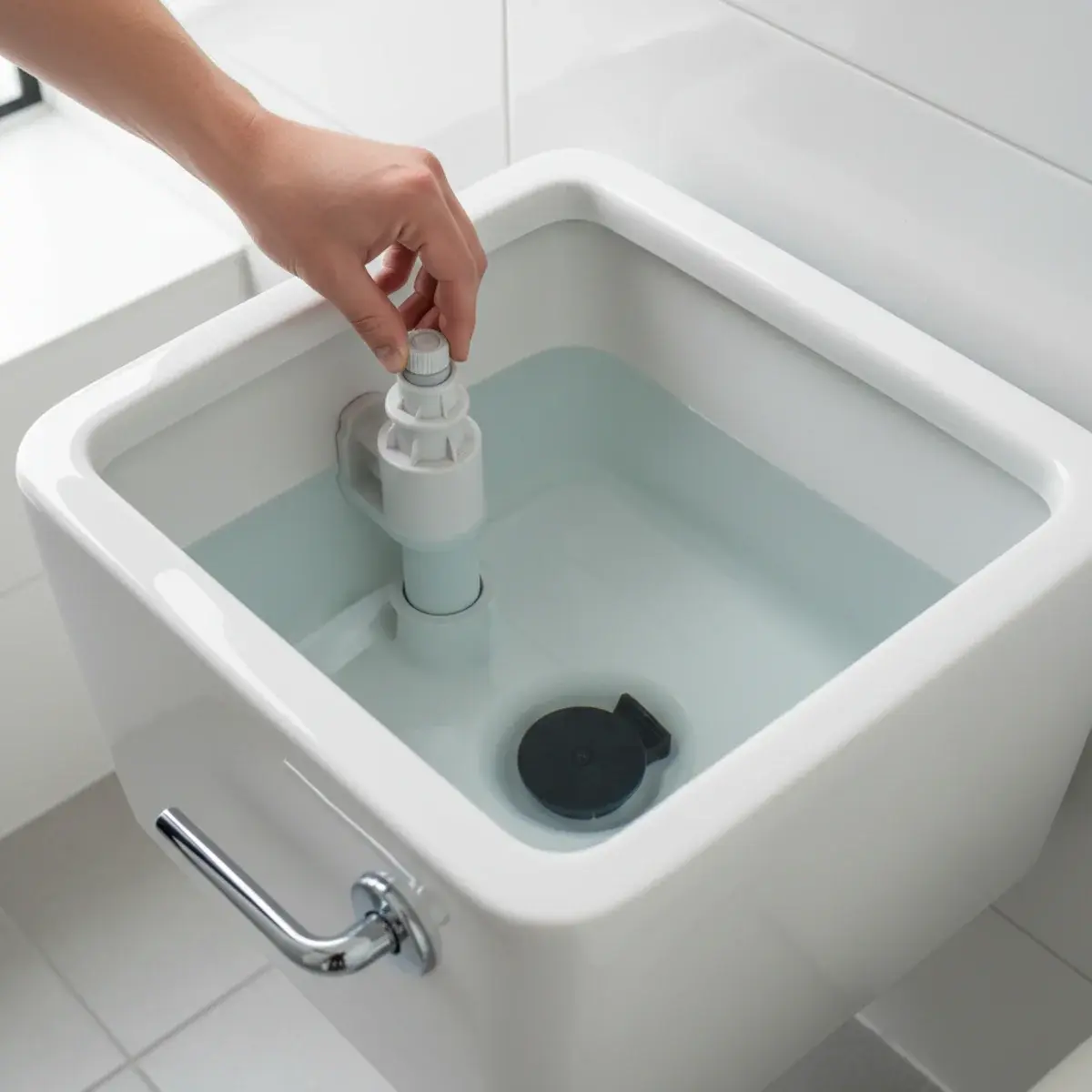
A running toilet is usually caused by a worn flapper, a misadjusted float, or a failing fill valve — all inexpensive parts. It also quietly wastes a surprising amount of water. Here is how to diagnose and fix it.
A toilet that keeps running is almost always an inexpensive fix, and it is worth addressing quickly because a running toilet silently wastes a surprising amount of water. The mechanism is simple: water is escaping from the tank somewhere it should not, so the fill valve keeps topping it off. Nine times out of ten the culprit is a worn flapper, a misadjusted float, or a tired fill valve — all cheap parts you can replace yourself. Here is how to find which one is causing your toilet to run.
How a toilet tank works (the 30-second version)
Understanding the parts makes the diagnosis obvious. When you flush, the flapper lifts to let tank water rush into the bowl. As the tank empties, the float drops, which opens the fill valve to refill the tank. As the water rises, the float rises with it until it reaches the set level and shuts the fill valve off. The overflow tube is a safety drain that sends excess water into the bowl if the level gets too high. A running toilet means one of these is not doing its job — water is leaking out, so the fill valve never gets the signal to stop.
Cause 1: a worn or misaligned flapper (the usual suspect)
The flapper is a rubber seal at the bottom of the tank, and it is the most common cause of a running toilet. Over time the rubber hardens, warps, or develops mineral buildup — accelerated by hard water — and stops sealing properly. Water then leaks slowly from the tank into the bowl, and the fill valve runs to keep replacing it.
How to check: Add a few drops of food coloring to the tank water and wait 15 to 20 minutes without flushing. If color appears in the bowl, the flapper is leaking.
The fix: Turn off the toilet's supply valve, flush to empty the tank, and replace the flapper. Flappers are inexpensive and snap into place; bring the old one to match it. While you are there, make sure the flapper sits flat and the chain connecting it to the flush lever is the right length.
Cause 2: a chain that is too short, too long, or tangled
The chain links the flush lever to the flapper. If it is too short or gets caught, it can hold the flapper slightly open so water keeps trickling out. If it is too long, it can slip under the flapper and prevent a full seal. Adjust the chain so there is just a little slack when the flapper is closed — enough to let it seat fully, not so much that it tangles.
Cause 3: the float is set too high
If the float is set too high, the tank fills past the top of the overflow tube, and water spills continuously into the tube and down into the bowl — so the toilet runs even though the flapper is fine.
How to check: Look at the water level. If it is at or above the top of the overflow tube, the float is set too high.
The fix: Lower the float so the water stops about an inch below the top of the overflow tube. On a modern column-style float, there is usually an adjustment screw or clip; on an older ball-and-arm float, you can adjust the arm. This is a quick, no-cost fix when it is the cause.
Cause 4: a failing fill valve
If you have checked the flapper and float and the toilet still runs — or the fill valve hisses, cycles on its own, or will not shut off — the fill valve itself may be worn. Fill valves are inexpensive and replaceable. Turn off the supply, drain the tank, disconnect the supply line, and swap in a new valve following the kit instructions. This also resolves a toilet that periodically refills on its own ("phantom flushing") when the cause is the valve rather than the flapper.
Why fixing it promptly matters
It is tempting to ignore a running toilet because it still flushes, but the water waste is real and constant. A badly running toilet can waste hundreds of gallons a day, and because the leak is silent and hidden in the tank, the first sign for many people is an inflated water bill. Given the cost of the parts versus the cost of the wasted water, fixing it quickly is an easy decision. Our guide to spotting hidden leaks covers other quiet water-wasters worth checking while you are at it.
When to call a plumber
The flapper, chain, float, and fill valve are all manageable do-it-yourself repairs with basic tools, and replacing them solves the vast majority of running toilets. Call a plumber when the toilet keeps running after you have replaced these parts, when you find water on the floor or a leak at the base (which can indicate a failed wax ring or a cracked fixture), when the toilet also rocks or is loose, or when you would simply rather have a professional handle it. A persistent problem after the simple fixes can point to something beyond the tank components.
The bottom line
A running toilet is one of the most common and most fixable plumbing annoyances. Start with the dye test to check the flapper, since it is the likeliest cause, then check the chain, the float level, and finally the fill valve. The parts are cheap, the repairs are straightforward, and stopping the waste quickly keeps it off your water bill. If the simple fixes do not stop it, or you see water at the base, that is your signal to bring in a plumber.
Frequently Asked Questions
The most common cause is a worn or misaligned flapper that no longer seals the bottom of the tank, letting water leak into the bowl so the tank refills endlessly. Other causes include a float set too high so water spills into the overflow tube, a chain that is too short or tangled, and a failing fill valve. Most are inexpensive to fix.
A lot. A continuously running toilet can waste hundreds of gallons a day in a bad case, which adds up quickly on your water bill. Because the waste is silent and out of sight, it often goes unnoticed until the bill arrives, so it is worth fixing promptly even though the toilet still flushes.
Usually yes. The common culprits — the flapper, the chain, the float, and the fill valve — are inexpensive, widely available parts, and replacing them is a manageable do-it-yourself job with basic tools. If the toilet still runs after replacing these parts, or you find a crack or a leak at the base, it is time to call a plumber.
Need a plumber in San Bernardino?
Call now or request service online and we'll connect you with local plumbing help.