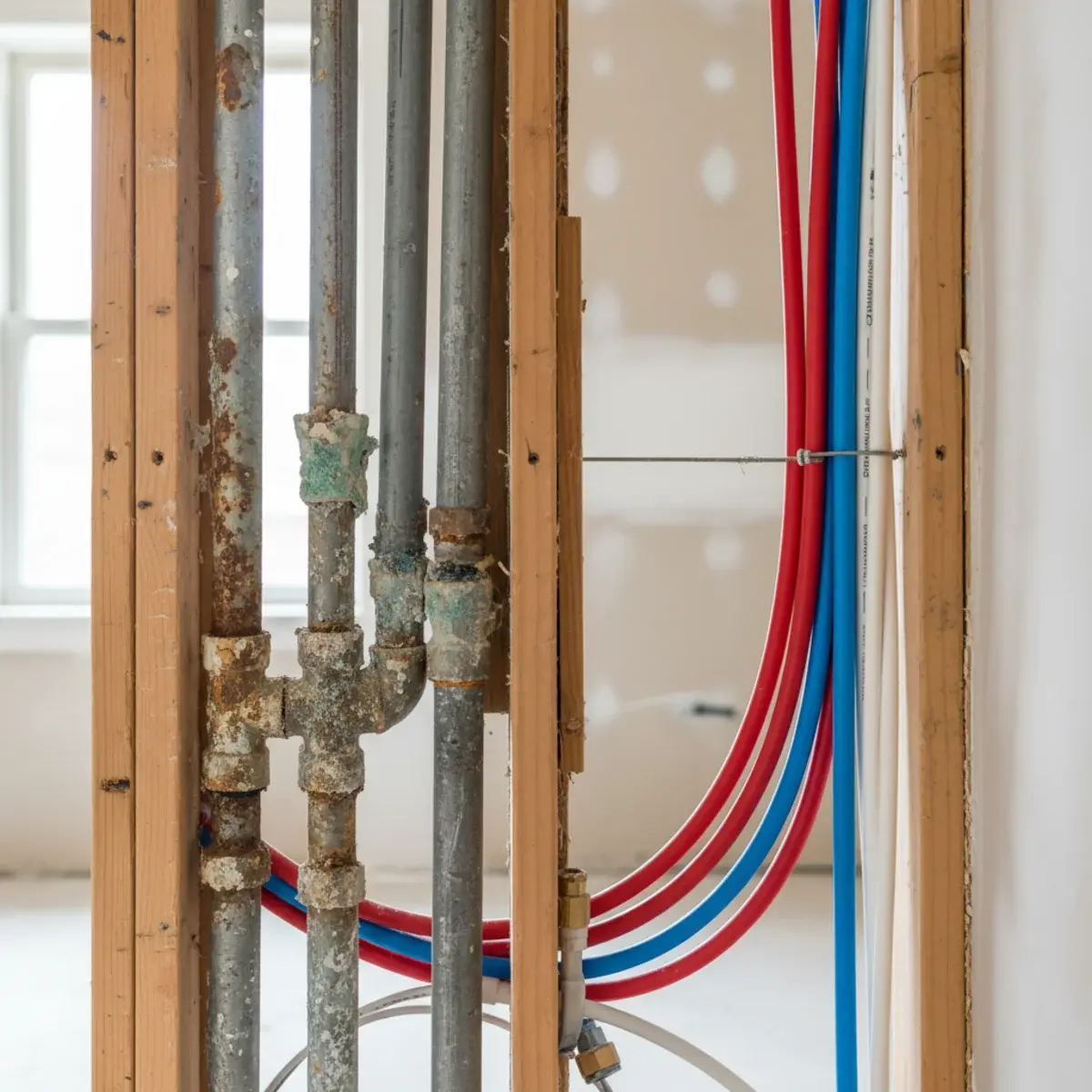
Repiping replaces the worn-out water lines in an older home before they cause leaks and water damage. Recurring leaks, discolored water, declining pressure, and very old galvanized pipe are the signs it is time. Here is what repiping involves.
Repiping is the replacement of a home's water supply pipes — sometimes the whole system, sometimes a major section — usually because the existing pipes have aged to the point where leaks, corrosion, and declining performance make ongoing repairs a losing battle. It is a bigger project than a typical plumbing repair, but for the right home it is a sound investment that ends the cycle of leaks and protects against water damage. Here is how to tell whether you need it, what materials and process to expect, and how to plan.
Why older homes eventually need repiping
Pipes do not last forever. Galvanized steel piping, common in homes built decades ago, corrodes from the inside out — rust narrows the pipe, restricts flow, discolors the water, and eventually leads to leaks. Older copper can develop pinhole leaks, particularly where water chemistry and age work against it. In San Bernardino, two local factors accelerate this aging: the area's hard water drives scale and corrosion inside the pipes, and many neighborhoods have a housing stock old enough that original plumbing is now near or past the end of its service life. When a home reaches that stage, problems stop being isolated and start being systemic.
The signs it is time to repipe
Recurring leaks. A single leak is a repair. But when you find yourself fixing leaks again and again — especially in different spots — the pipes themselves are failing, and patching one section while the rest deteriorates is a stopgap. Repeated leaks are the strongest practical signal that repiping is worth considering. Our guides to hidden leaks and slab leaks cover how these problems show up.
Rusty or discolored water. Brown, yellow, or reddish tinted water — particularly when you first turn on a tap — points to corrosion inside galvanized pipes. If the discoloration is widespread and persistent, the pipes are rusting from within.
Declining water pressure throughout the house. As corrosion and scale narrow aging pipes, flow drops. A gradual, whole-house decline in pressure over years (as opposed to a sudden drop) often traces back to the condition of the pipes themselves.
Visibly corroded or old pipe. If you can see your supply pipes in a basement, crawlspace, or garage and they are visibly corroded, flaking, or are old galvanized steel, that condition extends to the pipe you cannot see.
Frequent need for repairs. When plumbing repairs are becoming a regular line item, the math eventually favors replacing the system over endlessly maintaining it.
Repiping materials: copper and PEX
Modern repipes generally use one of two materials, and a good plumber will recommend based on your home and budget.
Copper has a long, proven track record. It is durable, handles heat well, and is widely trusted. It is typically the more expensive option and takes longer to install because each joint is fitted.
PEX (cross-linked polyethylene) is a flexible plastic piping that has become very common for repipes. It resists scale and corrosion — a real advantage in hard-water areas — is flexible enough to route through walls with fewer fittings, and is often faster and less disruptive to install. It is generally more economical than copper.
Both are code-compliant and reliable when installed correctly. The choice comes down to your priorities, your budget, and your plumber's assessment of your specific home.
What the repiping process looks like
While every home is different, a whole-house repipe generally follows this arc:
- Assessment and planning. The plumber inspects your existing plumbing, confirms repiping is the right call, and maps the new pipe routing. You will get a scope and an estimate.
- Preparation and access. The crew protects your home and opens limited, strategic access points in walls and ceilings to reach the pipes. Good crews keep these access holes as few and as small as the job allows.
- Installing the new pipes. The new copper or PEX lines are run, connected to fixtures and the water heater, and tied into the main supply.
- Inspection and testing. The new system is pressure-tested to confirm there are no leaks, and the work is inspected as required.
- Patching and cleanup. The access points are patched and the home is cleaned up. Some repipe projects include drywall patching; confirm what is covered in your estimate.
Many whole-house repipes are completed in a matter of days, with water service restored each day. Your plumber should give you a realistic timeline and explain how they will minimize disruption.
Planning and budgeting for a repipe
A repipe is a significant project, so plan deliberately:
- Get a written estimate with a clear scope — which lines are being replaced, the material, whether drywall patching is included, and the timeline.
- Consider getting more than one quote for a project of this size, and compare scope as carefully as price.
- Confirm permits and inspection are handled; repiping is permitted work, and proper inspection protects you and keeps your home's record clean.
- Think about pairing it with water treatment. Since hard water contributed to the original pipes' decline, adding a water softener or conditioning system at the same time helps protect the new pipes. Our hard-water guide covers the options.
- Time it sensibly. A planned repipe on your schedule is far less stressful than an emergency one after a major failure.
Repair or repipe?
Not every aging-pipe problem requires a full repipe. A single leak in an otherwise sound system is a repair. A localized section of bad pipe can sometimes be replaced on its own. Repiping makes sense when the problems are systemic — recurring leaks, widespread corrosion, discolored water, and declining pressure pointing to pipes that have collectively reached the end of their life. A trustworthy plumber will tell you honestly whether a targeted repair will hold or whether you are paying to delay an inevitable replacement.
The bottom line
Repiping replaces worn-out water lines before they fail, ending the cycle of leaks and protecting your home from water damage. The signs that it is time — recurring leaks, rusty water, declining pressure, and visibly old galvanized pipe — tend to appear together as a home's original plumbing ages, which is increasingly common in San Bernardino's older neighborhoods. With modern copper or PEX, a well-planned repipe is completed in days and gives you decades of reliable service. If repairs have become a recurring theme in your home, it is worth having a plumber assess whether repiping is the smarter long-term move.
Frequently Asked Questions
The clearest signs are repeated leaks in the same plumbing, rusty or discolored water, steadily declining water pressure throughout the house, visibly corroded pipe, and very old galvanized piping that has reached the end of its service life. When repairs become a recurring pattern rather than a one-time fix, repiping the system is often more economical than patching it indefinitely.
Modern repipes typically use copper or PEX (cross-linked polyethylene). Copper is durable and long-proven; PEX is flexible, resistant to scale and corrosion, and often faster to install. The best choice depends on your home, your budget, and your plumber's assessment — both are widely used and code-compliant when installed correctly.
It varies with the size of the home and the scope, but many whole-house repipes are completed in a matter of days. A plumber can give you a realistic timeline after assessing your home. Good crews minimize disruption and restore water service each day, and any drywall access points are patched as part of finishing the job.
Need a plumber in San Bernardino?
Call now or request service online and we'll connect you with local plumbing help.